
Project Objective
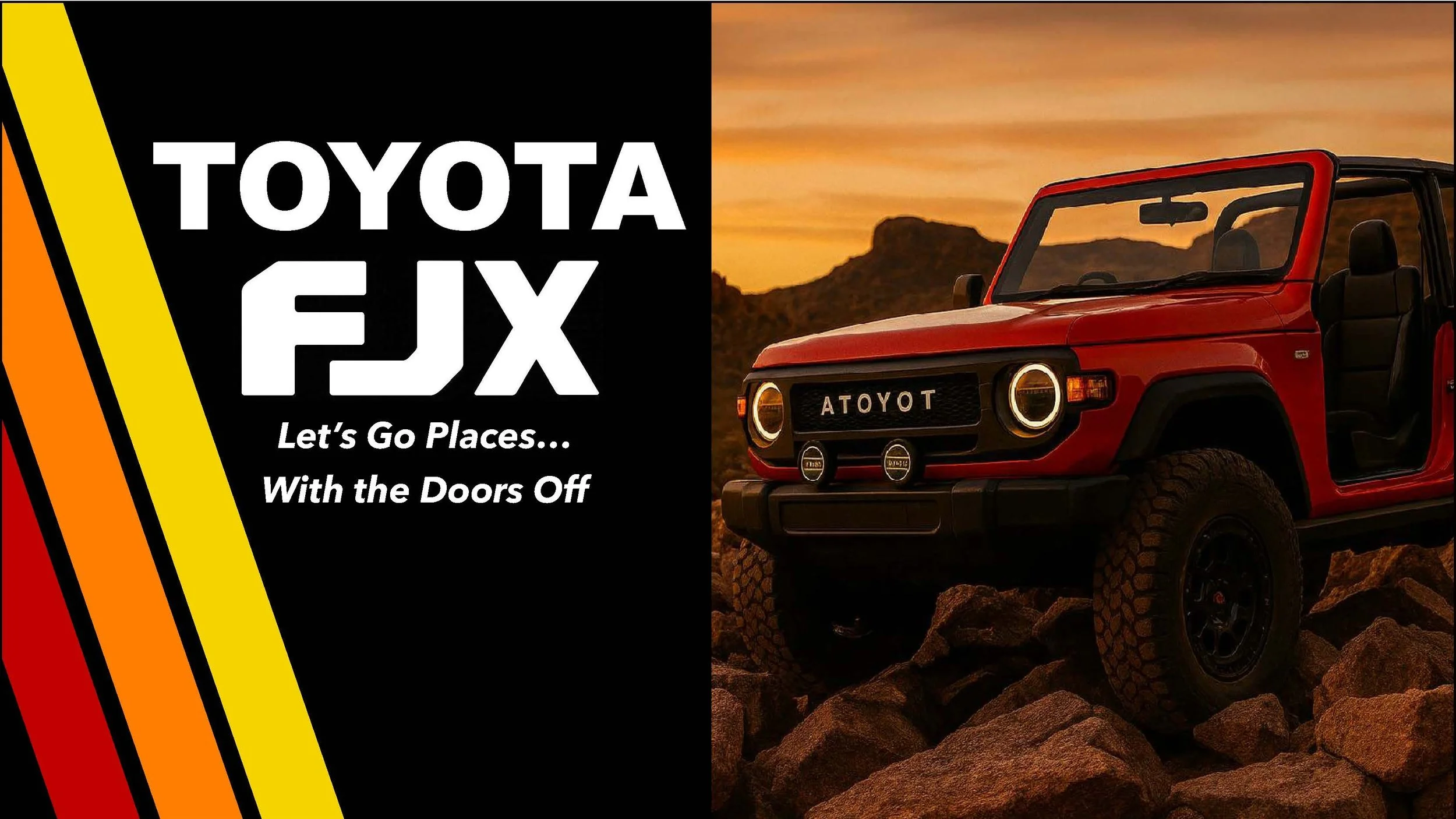
The objective of this project was to develop a clean-sheet vehicle concept with no predefined constraints, intended to represent a product that could realistically be sold in today’s automotive market. The task allowed complete creative freedom across vehicle type, target customer, design direction, and technical configuration, with the expectation that the final concept would be compelling from both an engineering and business perspective.
Vehicle Concept Description
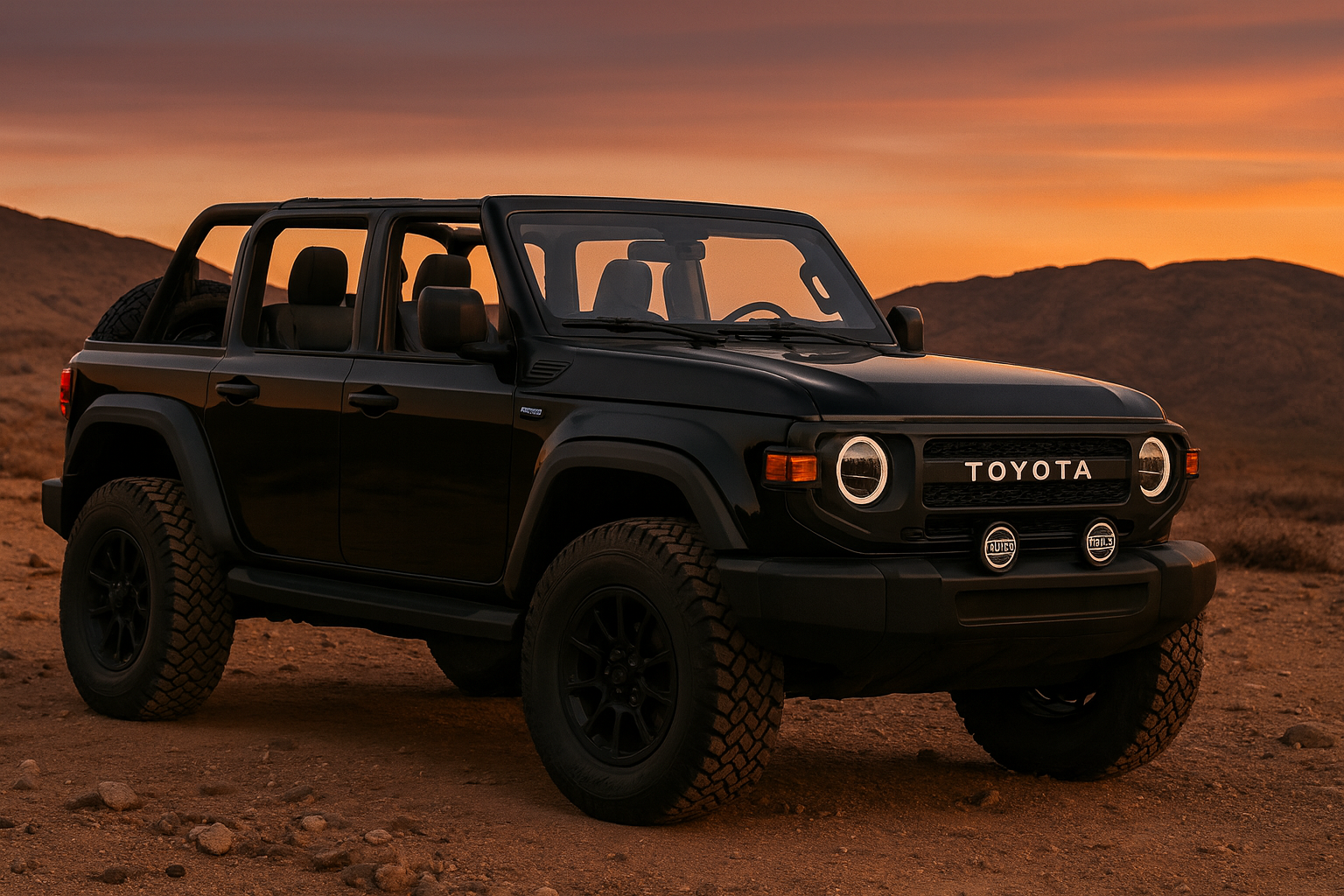
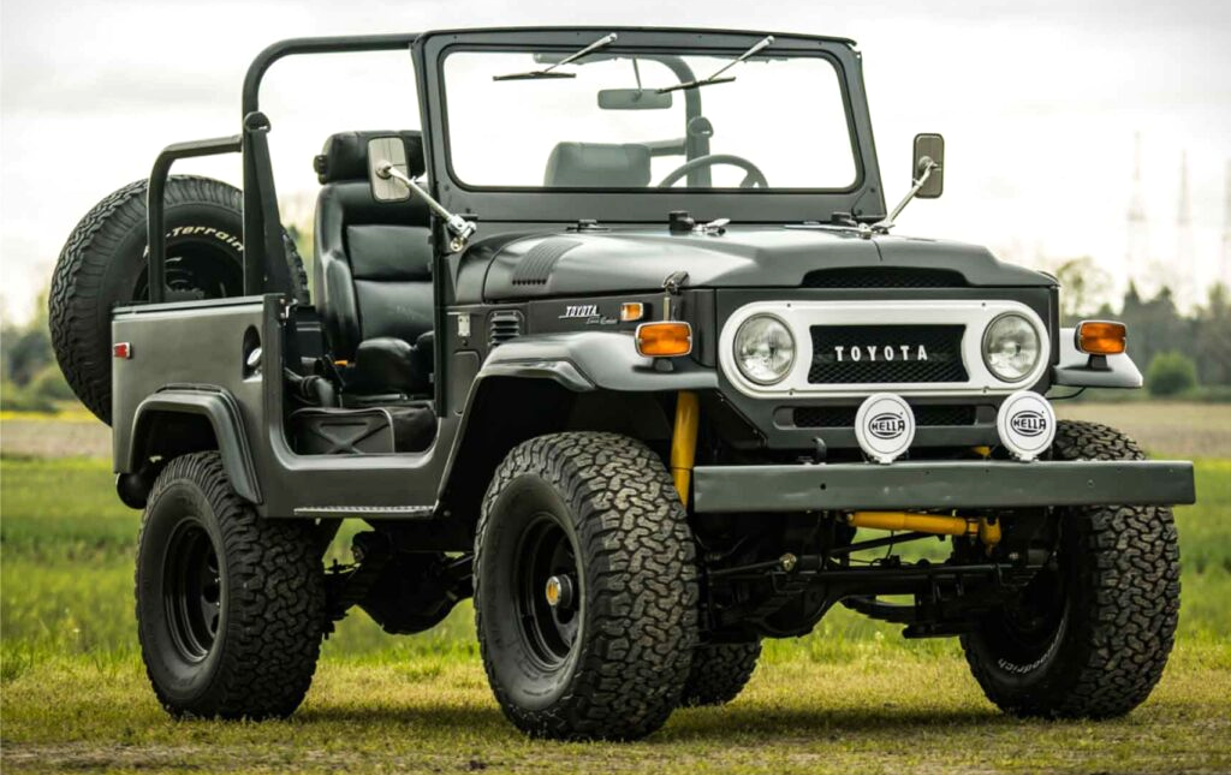
For the clean-sheet vehicle concept I decided to take a page out of Ford’s book with reviving an offroad name brand. The concept was to bring back the FJ nameplate and reimagine the FJ40 as a modern day Toyota. The underlying concept of this vehicle however is for Toyota to use it’s brand recognition and reliability to penetrate the Ford Bronco and Jeep Wrangler market. It was done before with the FJ40, so why not do it again?
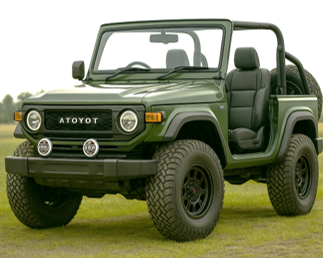
For this vehicle to be viable, it would need to be as cost-efficient as possible to launch an entirely new vehicle line. For that reason, this vehicle concept borrows heavily from existing SUVs within Toyota’s lineup.
Engine Options:
2.4L Turbo 4-Cylinder Hybrid (i-FORCE MAX) from the 2026 4Runner and Tacoma
4.0L Naturally Aspirated V6 (1GR-FE) from the previous-generation 4Runner and Tacoma
Transmission Options:
8-Speed Automatic from the 2026 4Runner and Tacoma
6-Speed Manual from the previous-generation Tacoma
Body Styles Options:
2-Door / 4-Door
Retractable Canvas Roof / Removable Hardtop Shell
Vehicle Architecture Concept
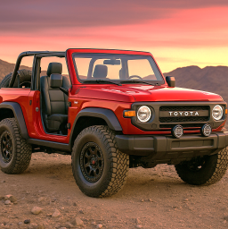
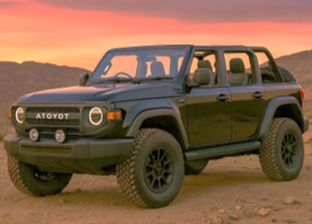
While adding more body styles and roof architectures would add complexity and cost to start the vehicle program. It would be a lost opportunity to fully penetrate the market and potentially convert Wrangler and Bronco owners to switch over.
Target Market Sales in 2024
•151,163 Jeep Wranglers sold in 2024 – MSRP Range: $34k to $70k
•109,172 Ford Broncos sold in 2024 – MSRP Range: $38k – $90k
Targeted Market Penetration
In the first full year of production for the Ford Bronco in 2021 108,000 vehicles were sold. Since then Jeep Wranglers Sales declined on average of 8% while Ford Broncos sales have risen an average of 4%. So clearly there are buyser making the switch.
With a market 260,000 buyers even with a 25% market penetration (not to mention other buyers) that would result in 65,000 units sold. For reference 87,000 4Runners were sold in 2025.
The direct and most obvious competition for the FJX would be the Jeep Wrangler and Ford Bronco. And it is designed to compete with these vehicles. There is a whole in the Toyota line of a purpose built fun fun free spirit off roader. While the TRD Pro line up has helped alleviate some of that hole, it does not offer the same experience as being able to take the doors and roof off and go places. Both the Bronco and Wrangler have decades of heritage and the recent boom of the Resto-Mod market seen in sports cars and offroaders, bringing back the iconic silhouette of the FJ40 would fit perfectly into this SUV crazed market.
Competition and Marketability
Effect on the Toyota SUV Lineup
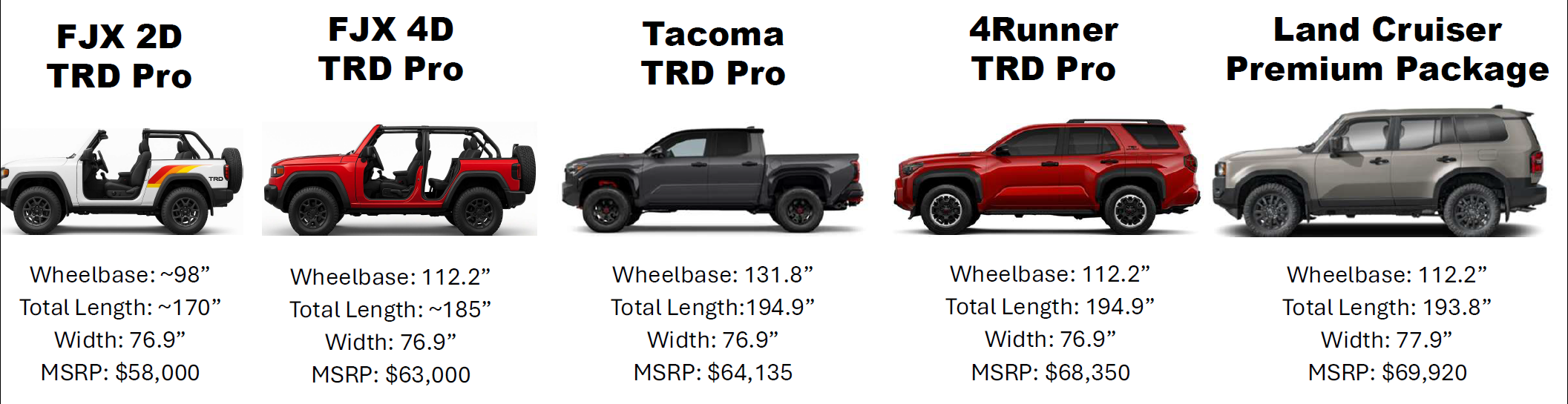
The FJX would be target at younger buyers, so it would be the least expensive Off-road SUV in the Toyota Lineup starting at $37,000 with top trim being 63,000 (TRD Pro Heritage edition). This starting price would be comparable to the Tacoma SR5 level that starts at $36,235.
The reason this vehicle would fit into the line up is it would be simplified with some creature comforts not being offered. This both because it could potentially undercut the Tacoma and 4Runner market, but also to keep the electronics simpler to decrease the potential for electrical issues due water exposure. Also there would be a considerable compromise with NVH with the ability retract or remove the roof so loyal buyer who are not willing to make that compromise would likely not make the switch (but Jeep and Bronco drivers who are used to this could be intrigued)
Project Takeaways
Developed a clean-sheet vehicle concept intended to be evaluated at an executive decision-making level rather than as a detailed engineering design.
Balanced brand identity, customer appeal, technical feasibility, and cost constraints to define a vehicle that could realistically succeed in today’s market.
Demonstrated how leveraging existing platforms, powertrains, and components can significantly reduce development risk and startup cost for a new vehicle line.
Explored the importance of simplicity and authenticity as differentiators in a segment increasingly dominated by complex, technology-heavy SUVs.
Applied systems-level thinking to connect engineering decisions, design direction, and business strategy into a cohesive vehicle proposal.