
Study on Aerodynamic Effects of an Airfoil and Spoiler
-
Set Up
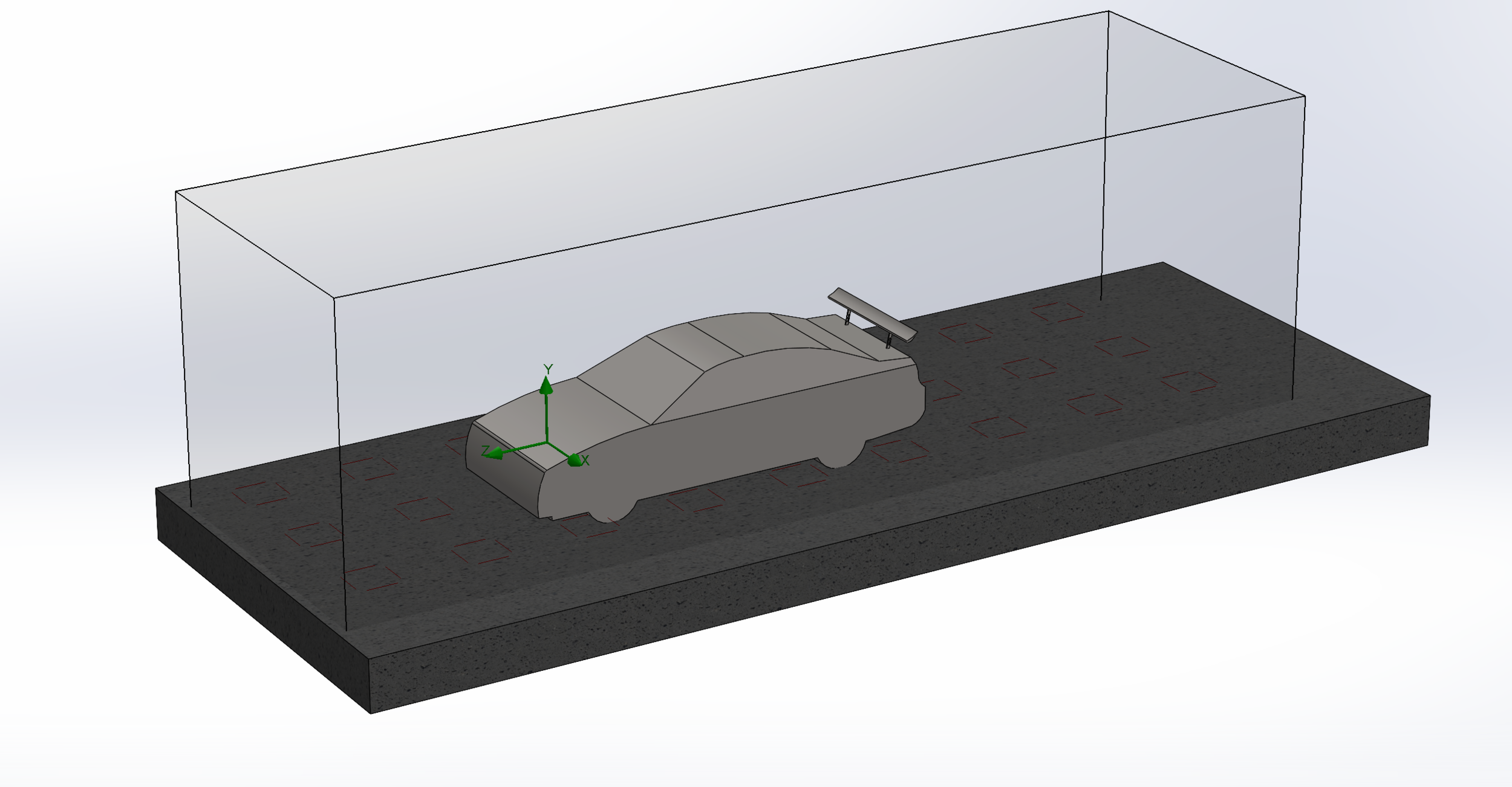
For the experiment, my partner and I used the Flow Simulation in SolidWorks to simulate air tunnel testing for our vehicle. For the setup of the study, we modeled our vehicle after a 2011 Acura TL on an ideal wall for the road. The boundary domain starts behind the start of the extruded base so only clean streamlines would be hitting the vehicle. We had 3 configurations. They consisted of a stock rear end, spoiler, and an airfoil (wing). In this experiment, we did not include the endplates on the wing so I could observe the effects of the wing better. For the governing equations, we used Global Goals in the Y and Z direction for downforce and drag. Then used Equation Goals for coefficients of drag and lift. We ran the experiments five times for each configuration at 10, 20, 30, 40, and 50 meters per second.
-
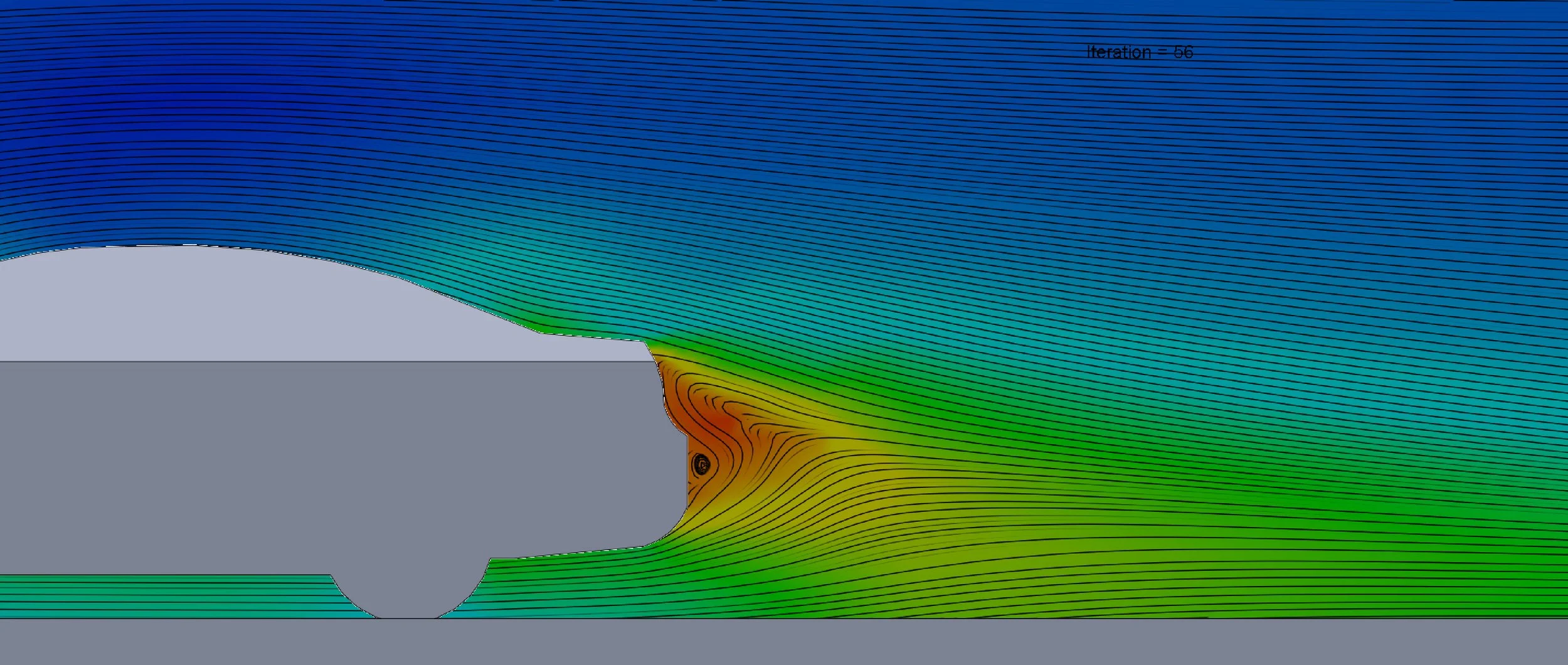
Stock Configuration at 50 meters per second
This configuration was to give baseline results for the effects of a spoiler and wing. As shown in the figure above, the red region show the slower air being trapped behind the car which is a visual representation of drag.
-
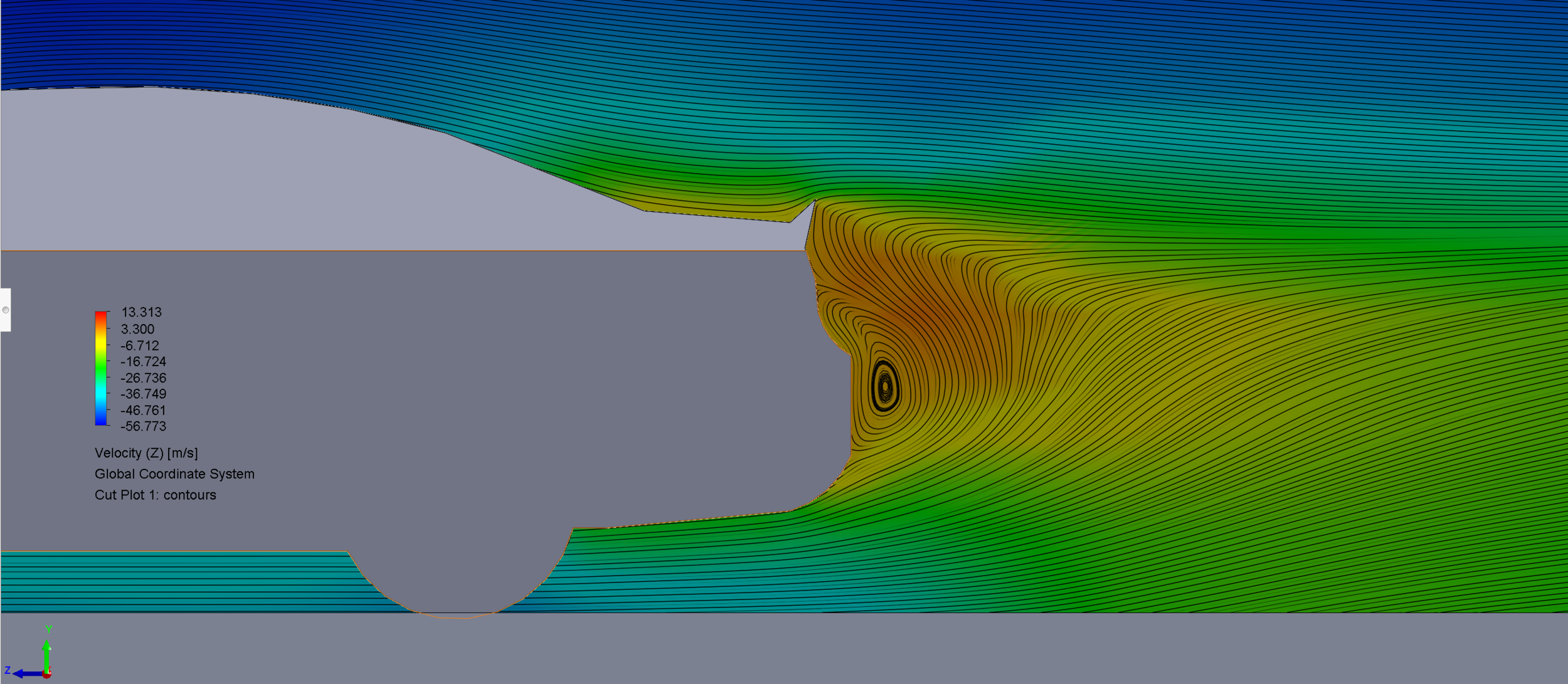
Spoiler Configuration at 50 meters per second
For this configuration, we modeled it after a NASCAR style rear spoiler. I was evaluating the effects of the wing with drag and downforce in mind. In the figure above, the air is hitting the rear spoiler and being deflected upward producing downforce by the principles of the Navier Stokes Equations. The effect of this however is a larger region of slower moving air which produces more drag.
-
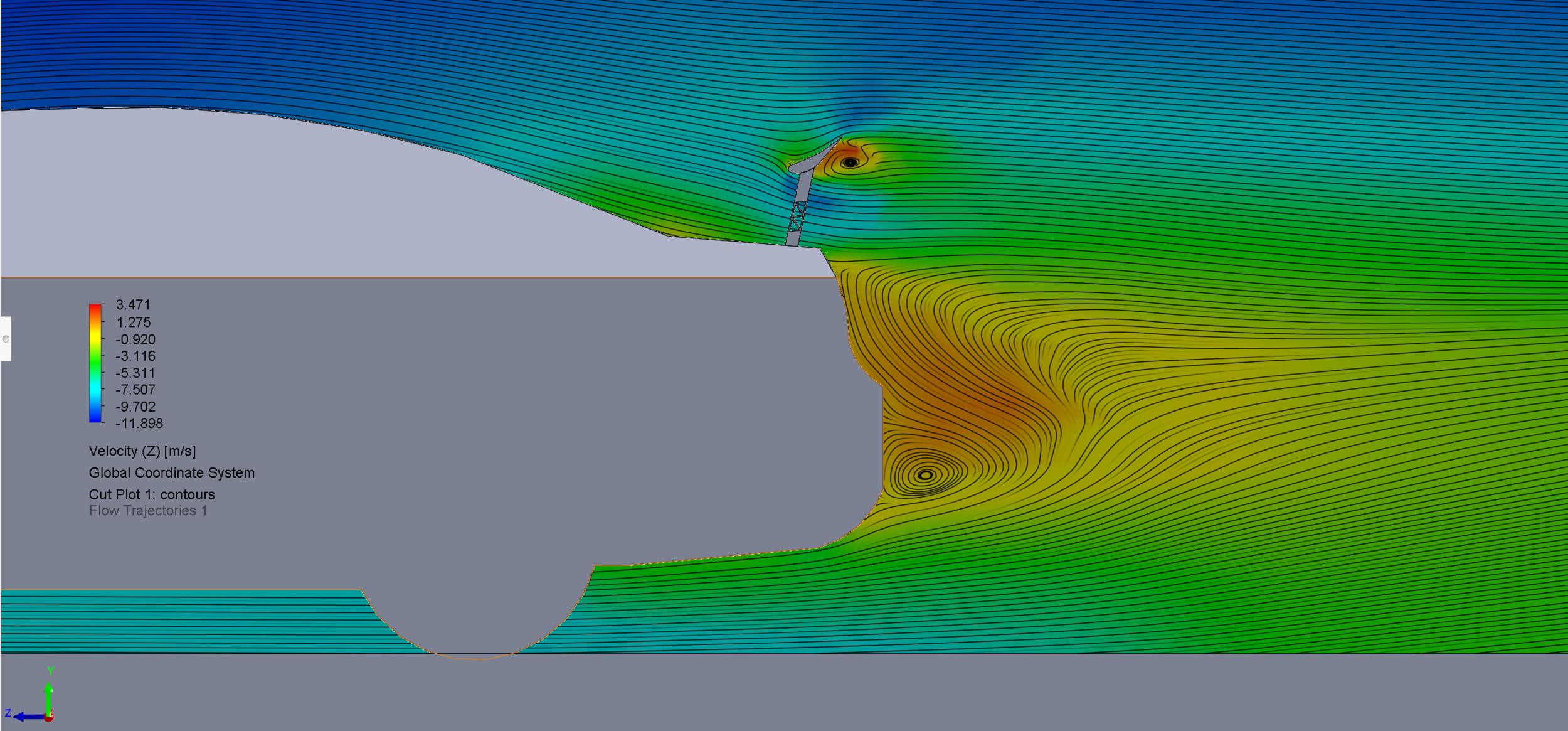
Wing Configuration at 50 meters per second
The Wing Configuration I set up as a single element at a high angle of attack. In this configuration, the air closer toward the body of the car flows similar to the stock configuration but near the wing element the air is being redirected and turbulent air flow is created. However, compared to the Spoiler Configuration it is evident that there is a more profound effect of air being redirected which is shown in the data.
-
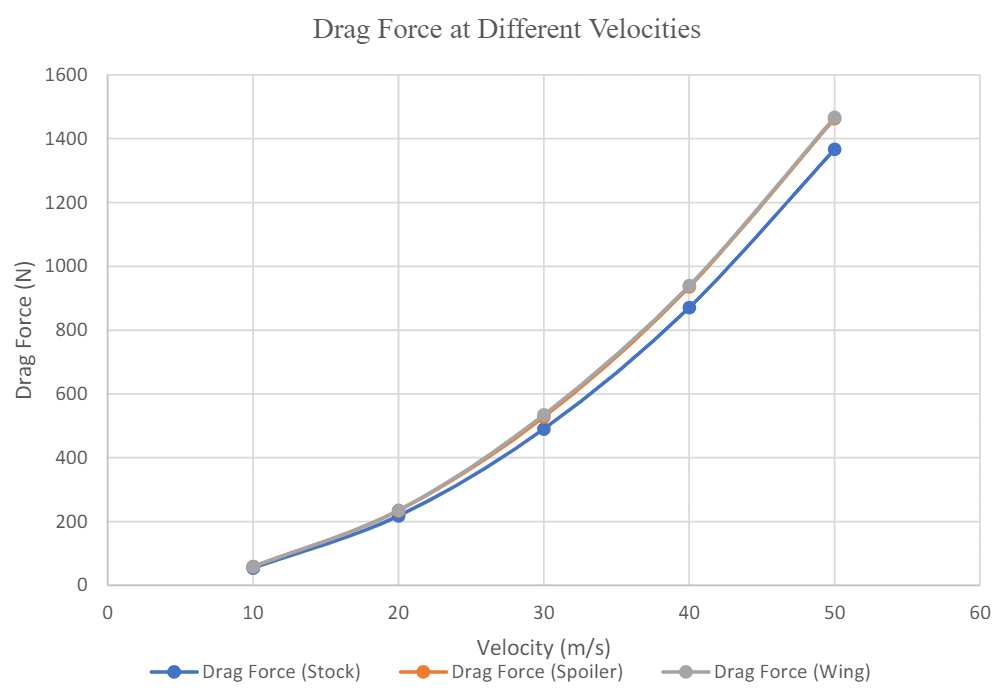
Results of Drag from the trials
In the 15 different trials 5 for each configuration, it becomes evident that the spoiler and wing are producing more drag than the stock configuration. However, in particular, the spoiler and wing with their design produce nearly identical amounts of drag. This is likely due to the aggressive design of the wing with it being high off the rear deck of the vehicle and high angle of attack.
-
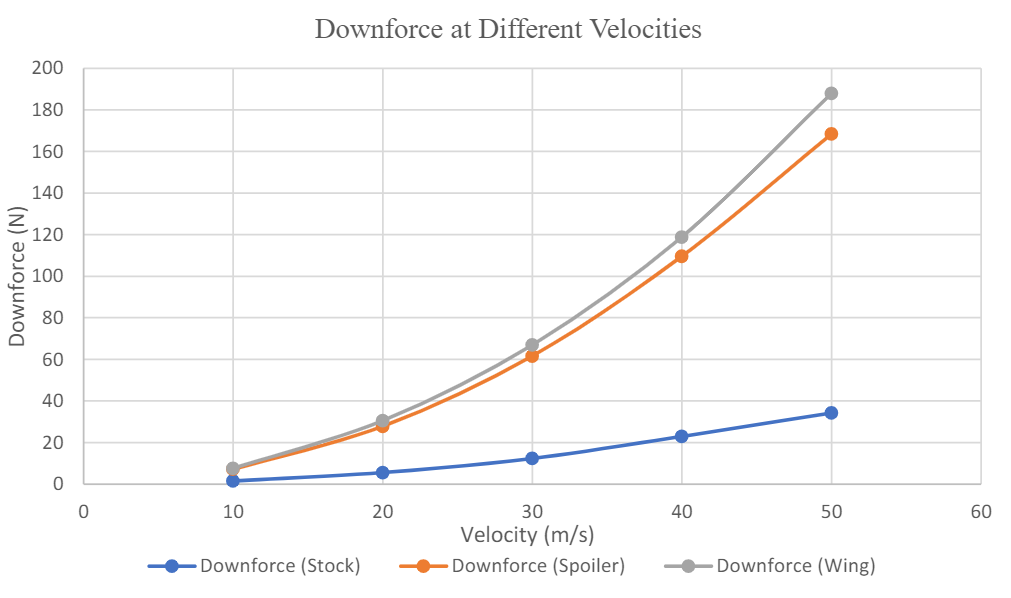
Results of Downforce from the trials
From the same 15 trials, 5 on each configuration, it becomes evident the benefits of choosing a wing over a spoiler. While the spoiler and wing produce very similar amounts of drag the wing produces a noticeable amount more downforce compared to the spoiler. These results can be varied with the height or angle of attack on the wing, or the height of the spoiler. However, from these designs and configurations, it is evident that for racing applications a wing would be a far more beneficial choice than a spoiler.