
Purple Garage: Deep Orange 9 Engine Tuning on Dynamometer
Project Background
Deep Orange is vehicle prototype program offered through the Department of Automotive Engineering at Clemson for masters students. It is an 18 month project that works with industry partner and produced prototype vehicles to make the student more prepared to work at OEMs.
The Deep Orange 9 project was a partnership with Honda to showcase the current and future technologies in the automotive field. So the student decided to culminate all of these technologies into a rally cross race hybrid racecar. Finished in 2019 the car was used a few years for demonstrations then was placed on display until Purple Garage inherited it to make it run again and be able to do show cases at department and school events.
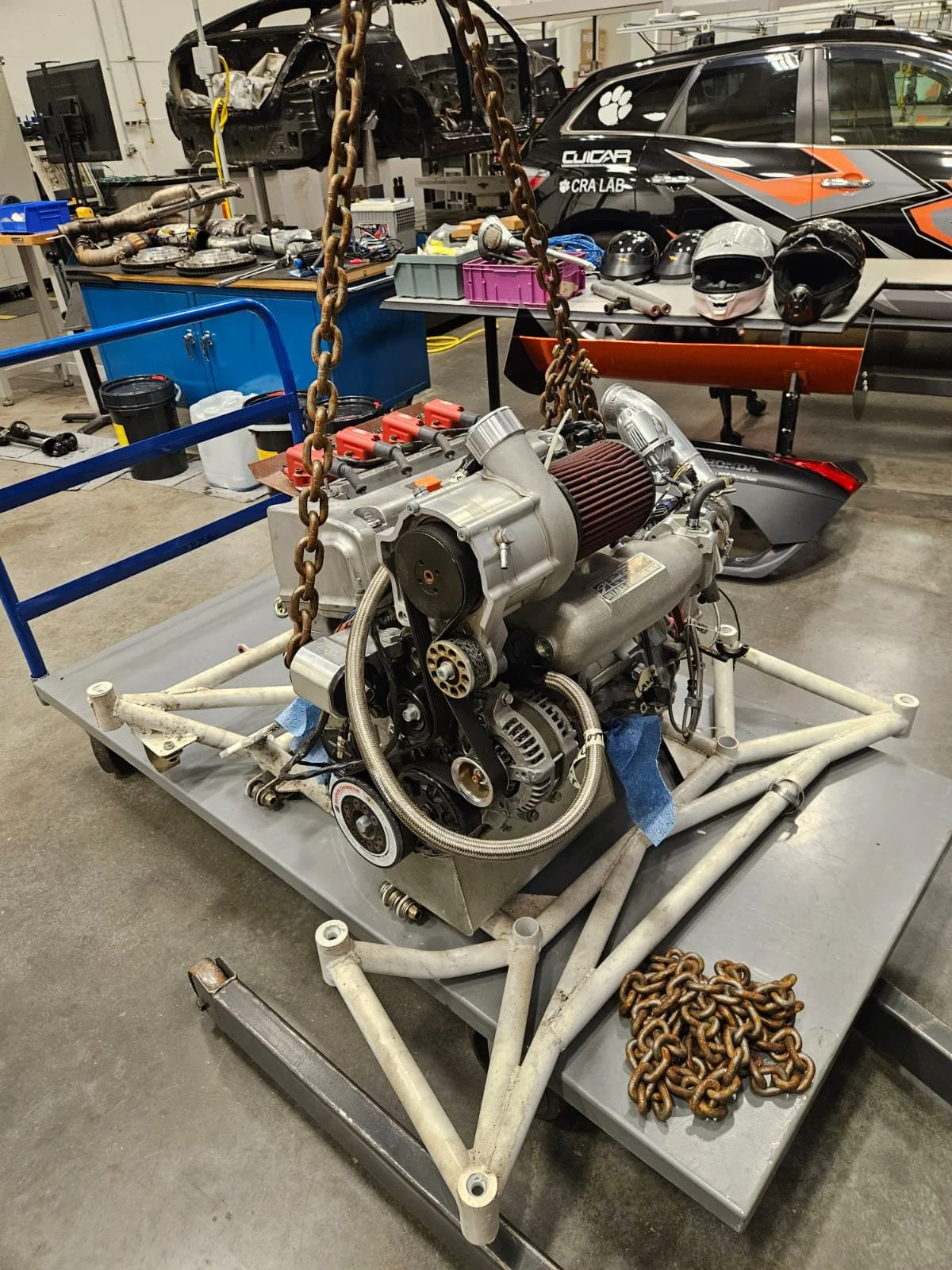
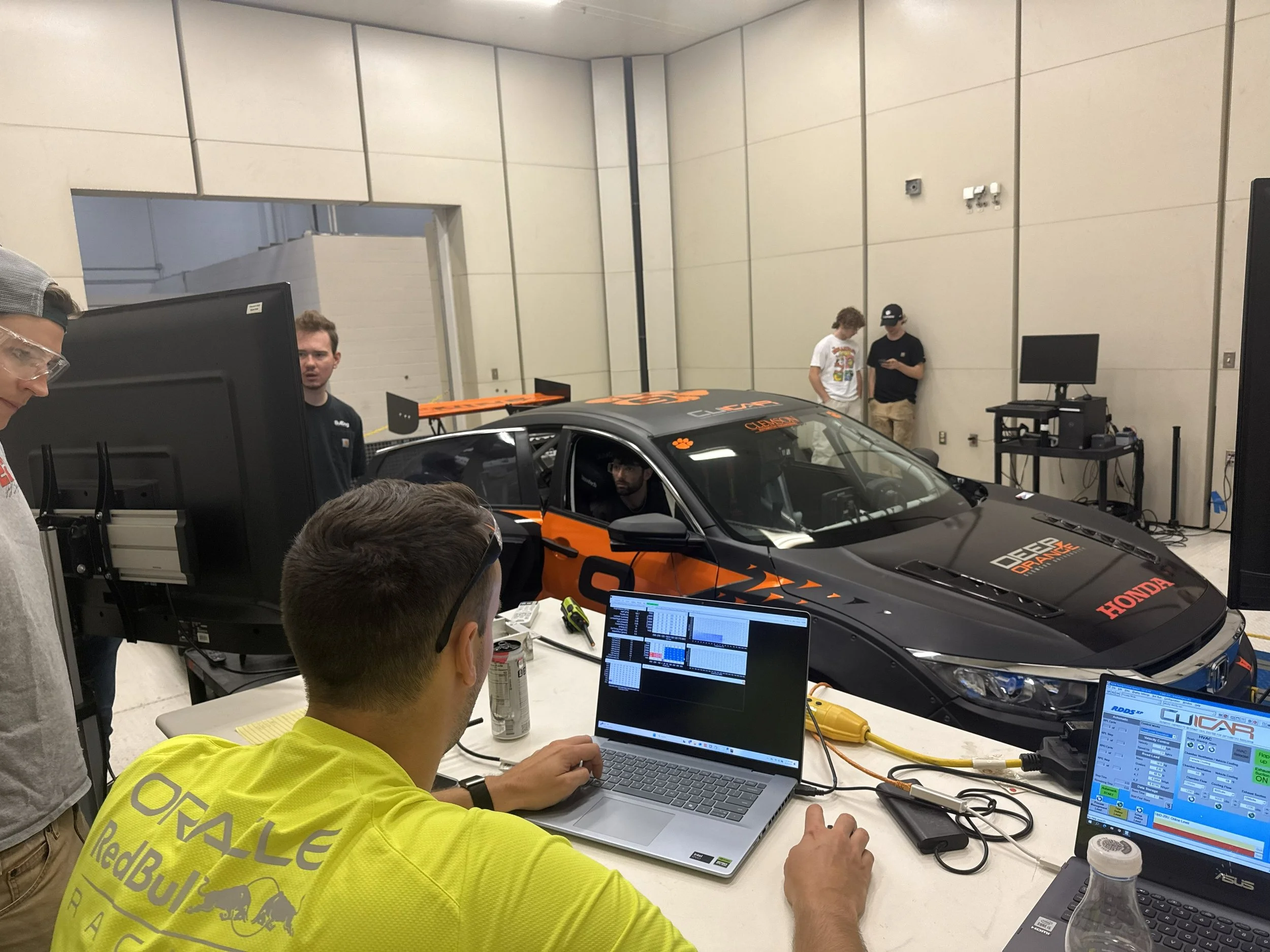
Prior to me joining The Purple Garage the team rebuilt the motor and got it to start and run at low speeds. However it had problems idling at a steady RPM, and wasn’t making the power it was intended to make. So graciously the Department of Automotive Engineering allowed us to use the chassis dynamometer over a weekend to fix some of these issues.
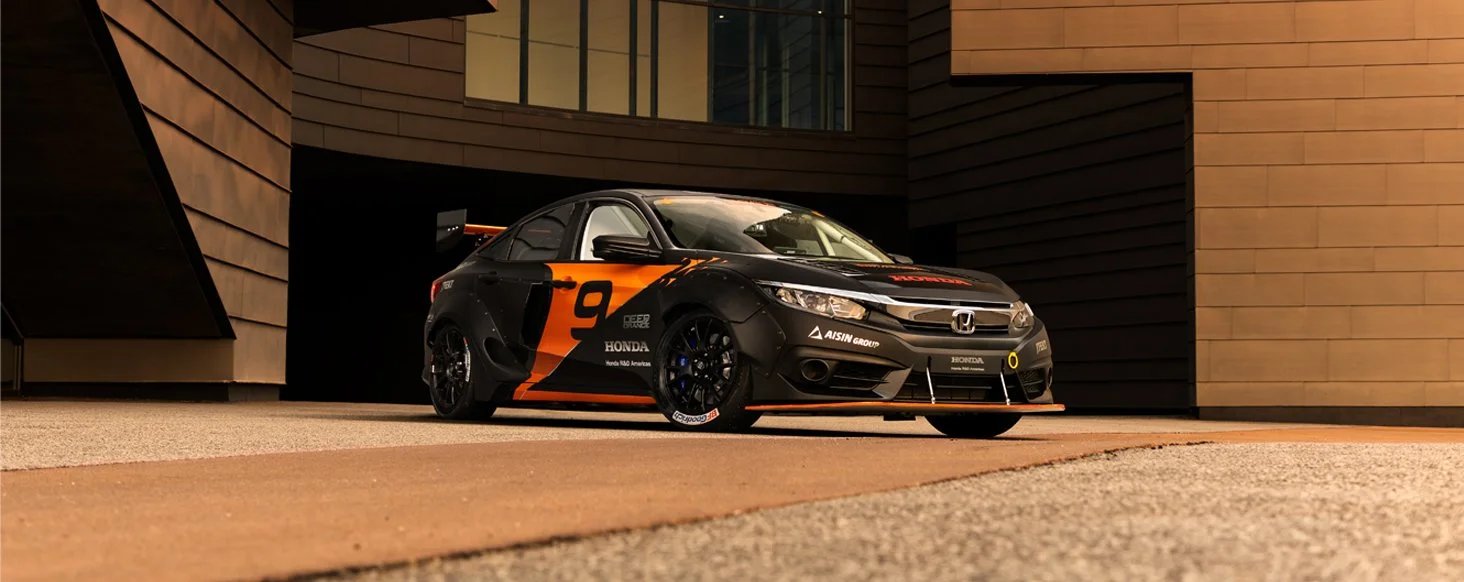
Deep Orange 9 Details:
Make / Model: 2018 Honda Civic
Engine / Layout: Mid Engine K20A4 with a centrifugal supercharger
Transmission: Sequential
Fuel: E85
Features Removed for Complexity and Maintenance Upkeep:
4 wheel steering
Electric Motor powering front axle
Front and Rear Axle Lift system
Project Objectives / Methods
Project Objectives:
Fix Manifold Air Pressure maps in the ECU to help stabilize AFR values from 02 sensors
Fix Ignition Timing maps to optimize power output
Optimize Transient Fueling for smoother more predictable power delivery
Methods:
Keep vehicle at steady speeds and sweep through the engine map and adjust MAP map so that the idealized and actual lambda values are the same. Will result in the ECU not having to make as many changes while running leading to smoother running
Keep the vehicle at steady speeds and sweep through the engine map and adjust Ignition Timing Maps. The higher RPMs will require earlier ignition timing due to mean piston speed being higher and flame propagation speed staying relatively the same
Have the driver accelerate and decelerate and give feedback with the feel and responsiveness to input.
Also use throttle pedal traces and power output curves to see how quickly the engine is able to react
Project Results
With using a smooth roller dynamometer we unable to accurate readout of power due to the tire producing more torque than the roller would allow. However we were able to run speed sweeps at different RPMs and throttle input to be able to fix the ignition timing and MAP maps. We were also able to adjust transient fueling maps to a certain degree making the car more responsive and predictable.
By the end of the day the car’s idle was much better and the lambda values from the O2 sensor where much closer to the idealized lambda values from the table due to adjusting the MAP map. The cars power was increased as a result but in order to get maximum power and torque number we would have to take the car to a dynamometer that is meant to deal with more power.
As of now the car is ready for us to take it out to the test track and finally have some fun with it and see what it can do.