Clemson Formula SAE Team
Aug 25’ - Present
Overview
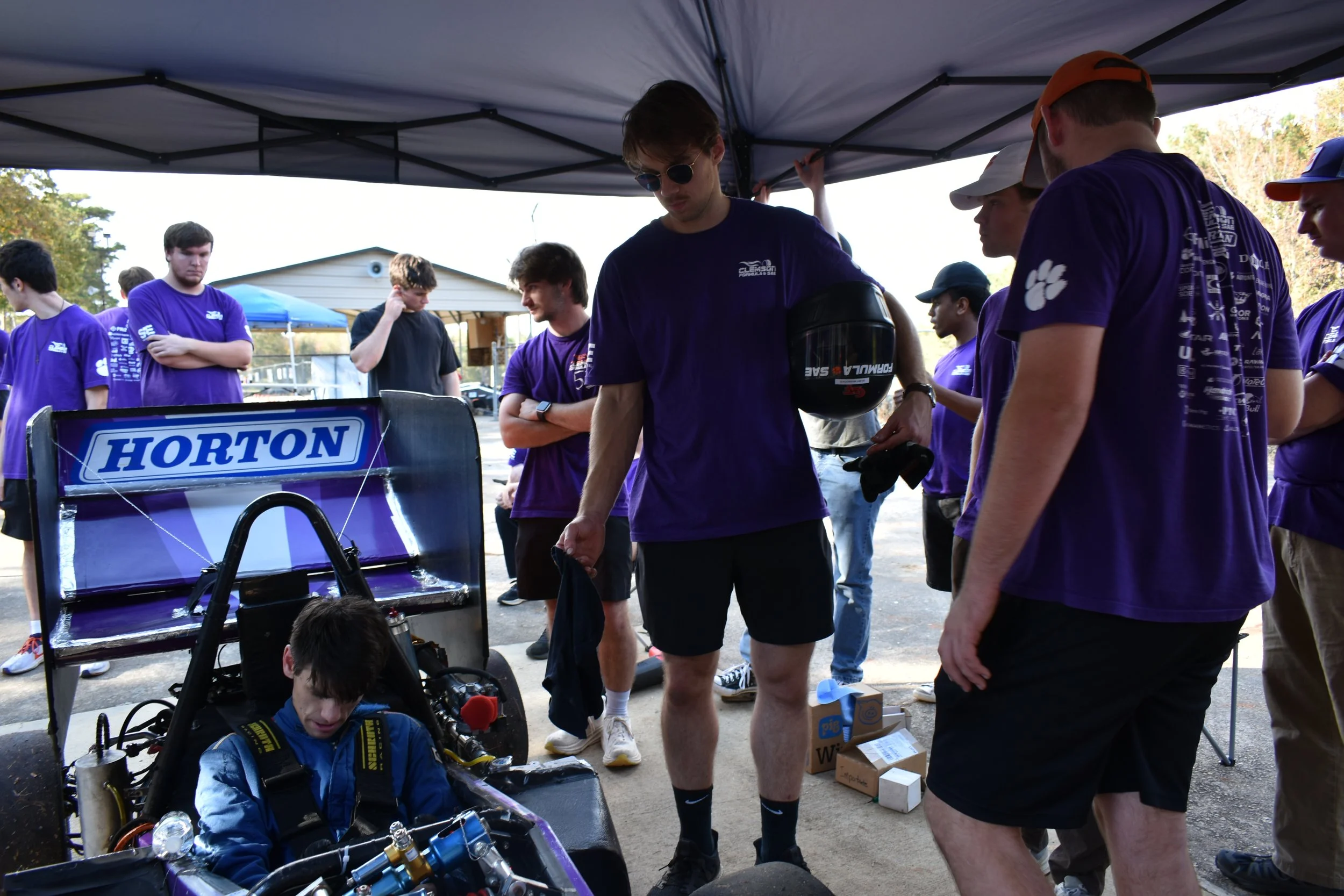
Member of the Clemson Formula SAE team contributing in a cross-functional technical support role, assisting multiple subteams while providing design insight across suspension, chassis, and vehicle integration systems. Support vehicle readiness and system integration prior to on-track operation, drawing on prior Formula SAE experience and graduate-level vehicle dynamics coursework.
Year 1 - Senior Suspension Engineer
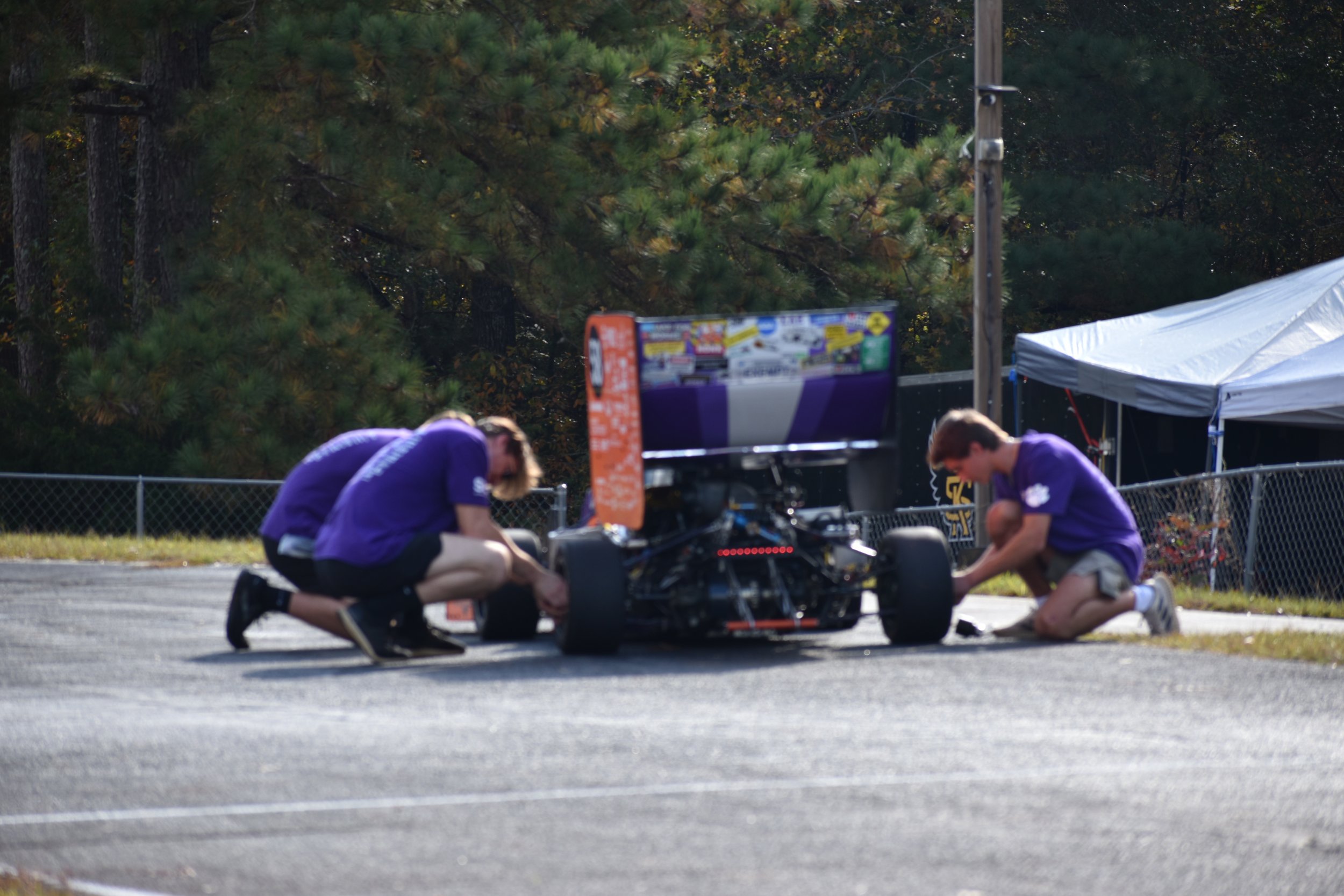
• Serve in a flexible technical support position rather than owning a single component.
• Apply prior Formula SAE experience and graduate-level vehicle dynamics coursework to support suspension and chassis design decisions.
• Lead a compliance study project evaluating how suspension and chassis component flexibility stacks up and alters overall kinematics.
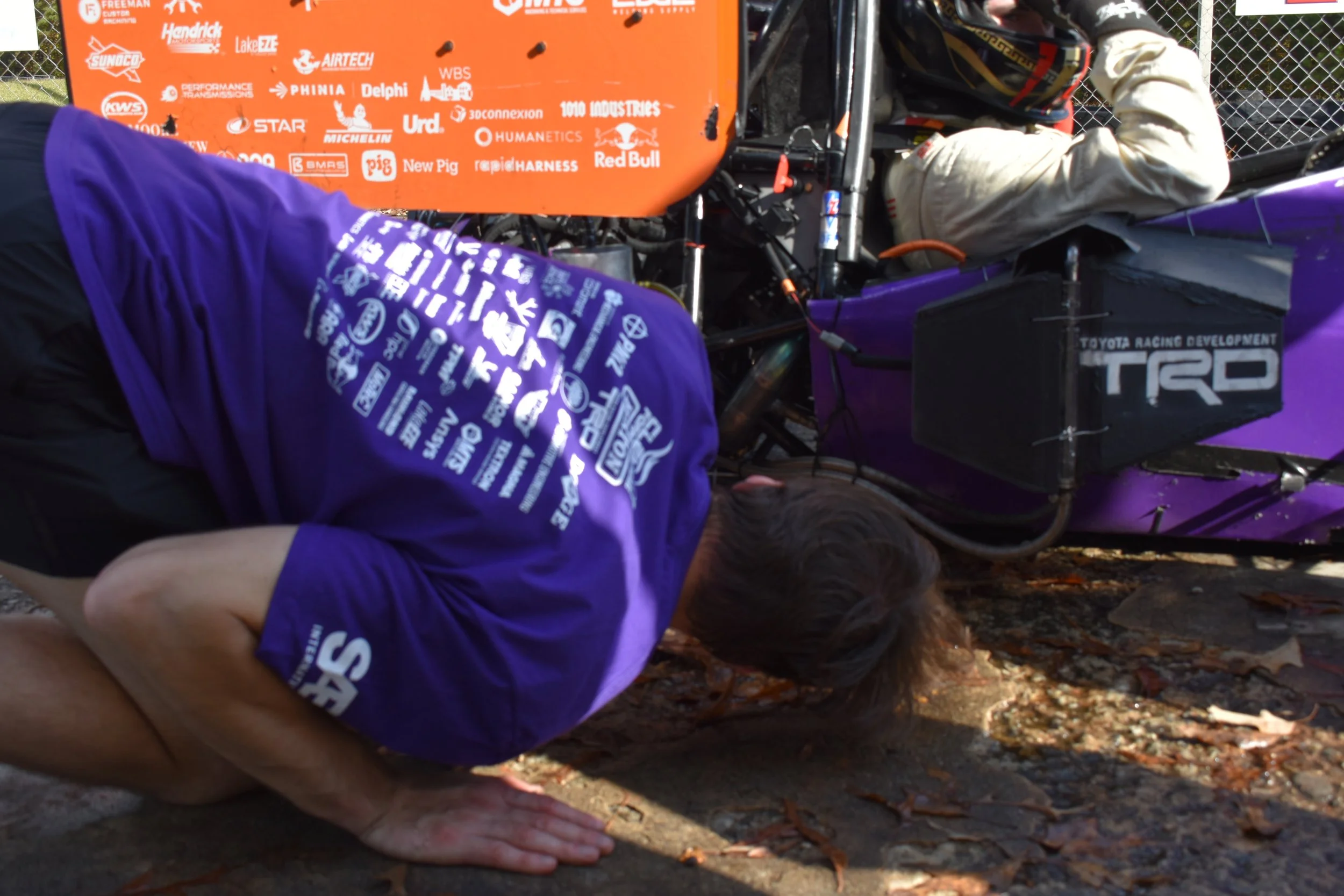
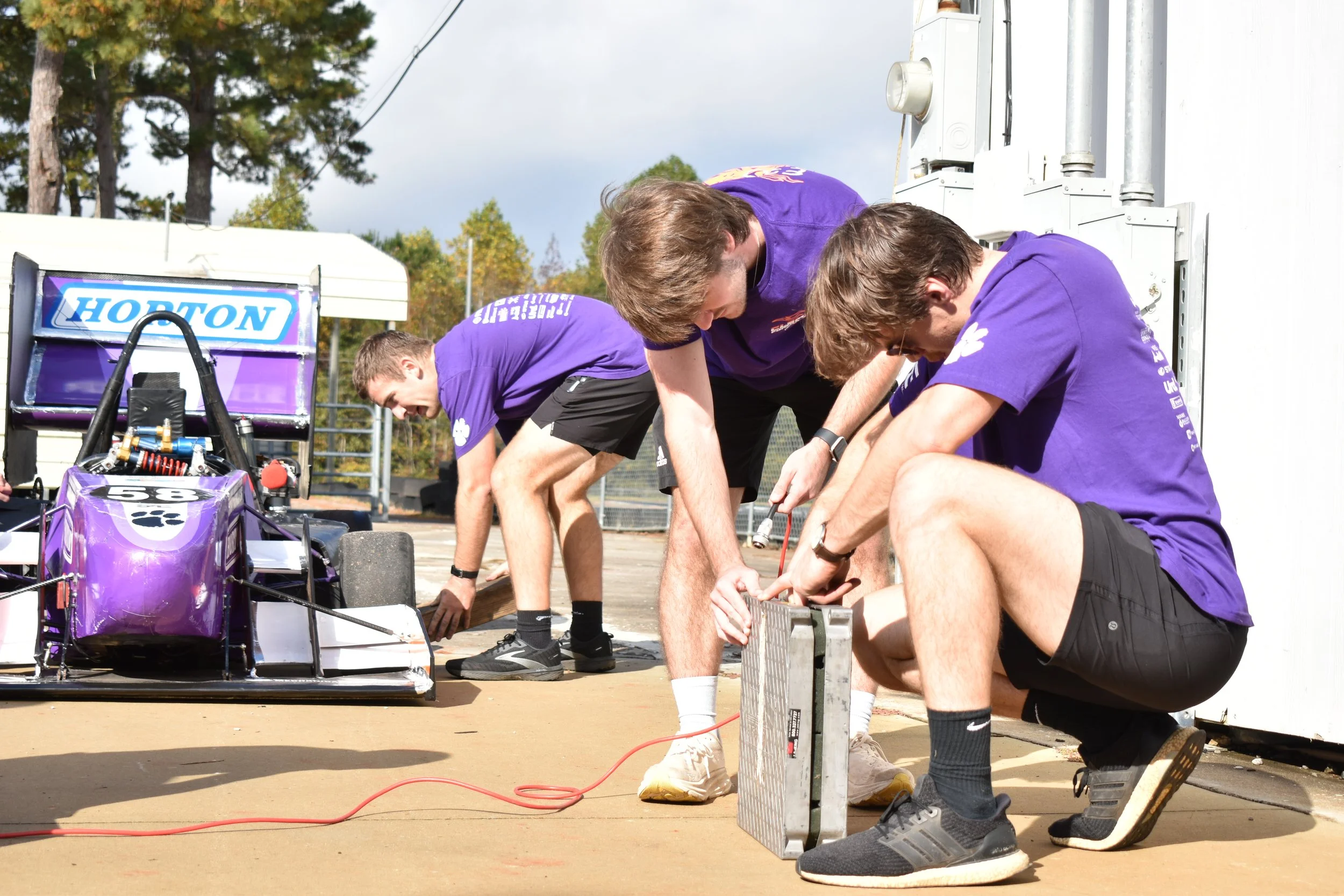
• Assist with fabrication and assembly efforts, helping manufacture components and instruct new members on proper shop techniques, tool usage, and build procedures.
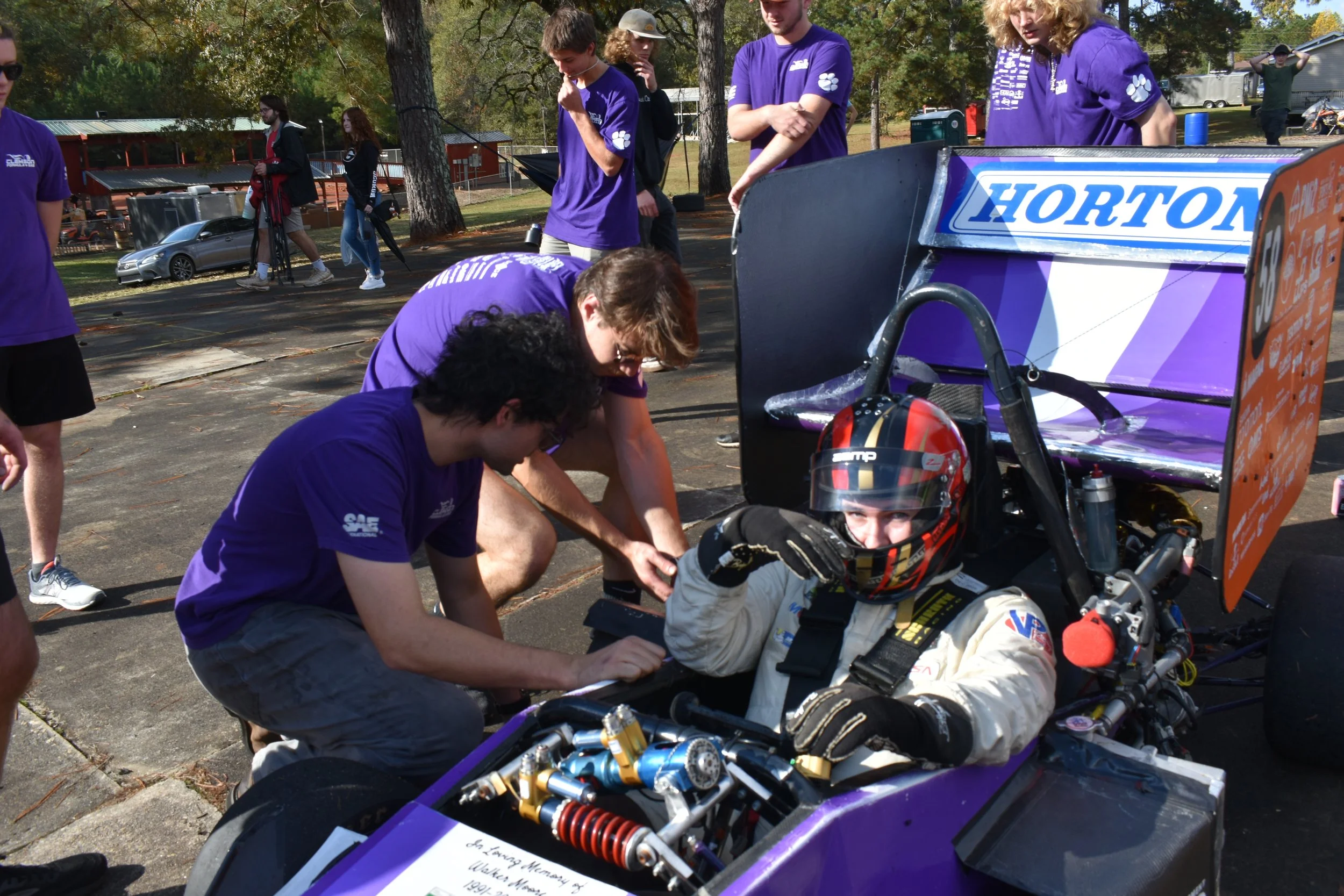
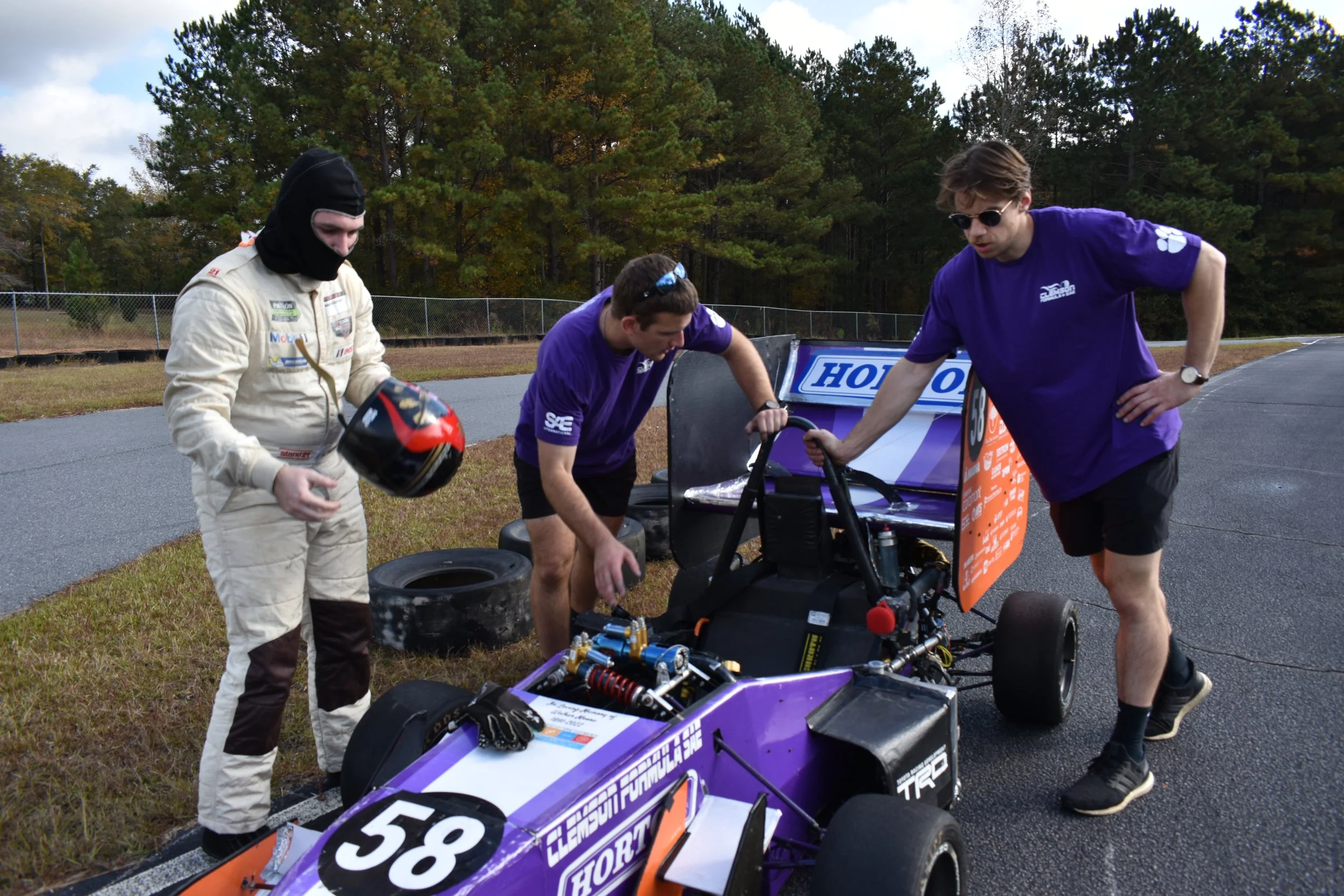
• Assist with pre-run vehicle oversight, reviewing system integration and helping ensure the car is prepared for safe and effective on-track operation.
Competition Impact
While not yet have attending the Michigan Formula SAE competition with the Clemson Formula SAE team, we have attended smaller competitions and numerous test and tune days.
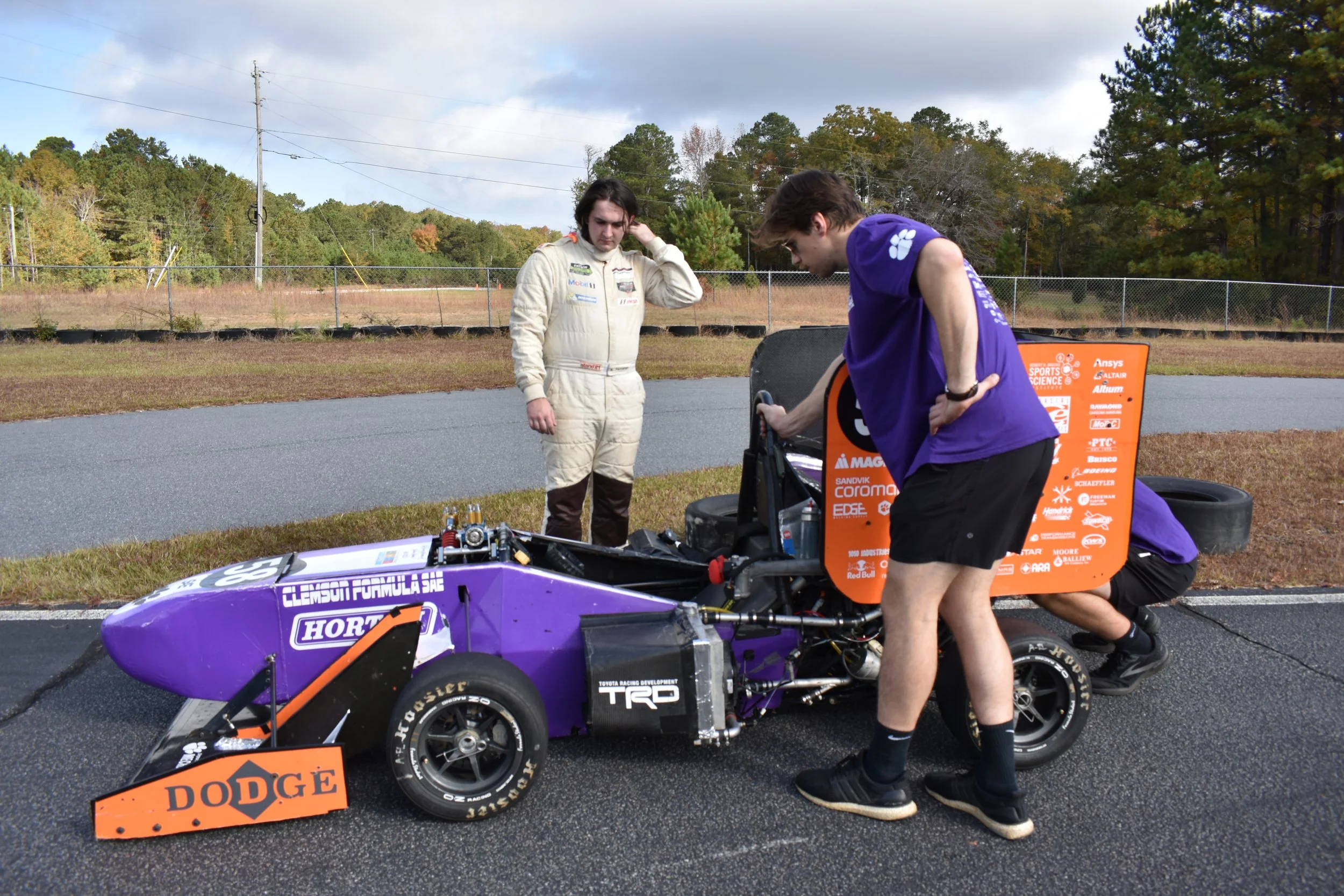
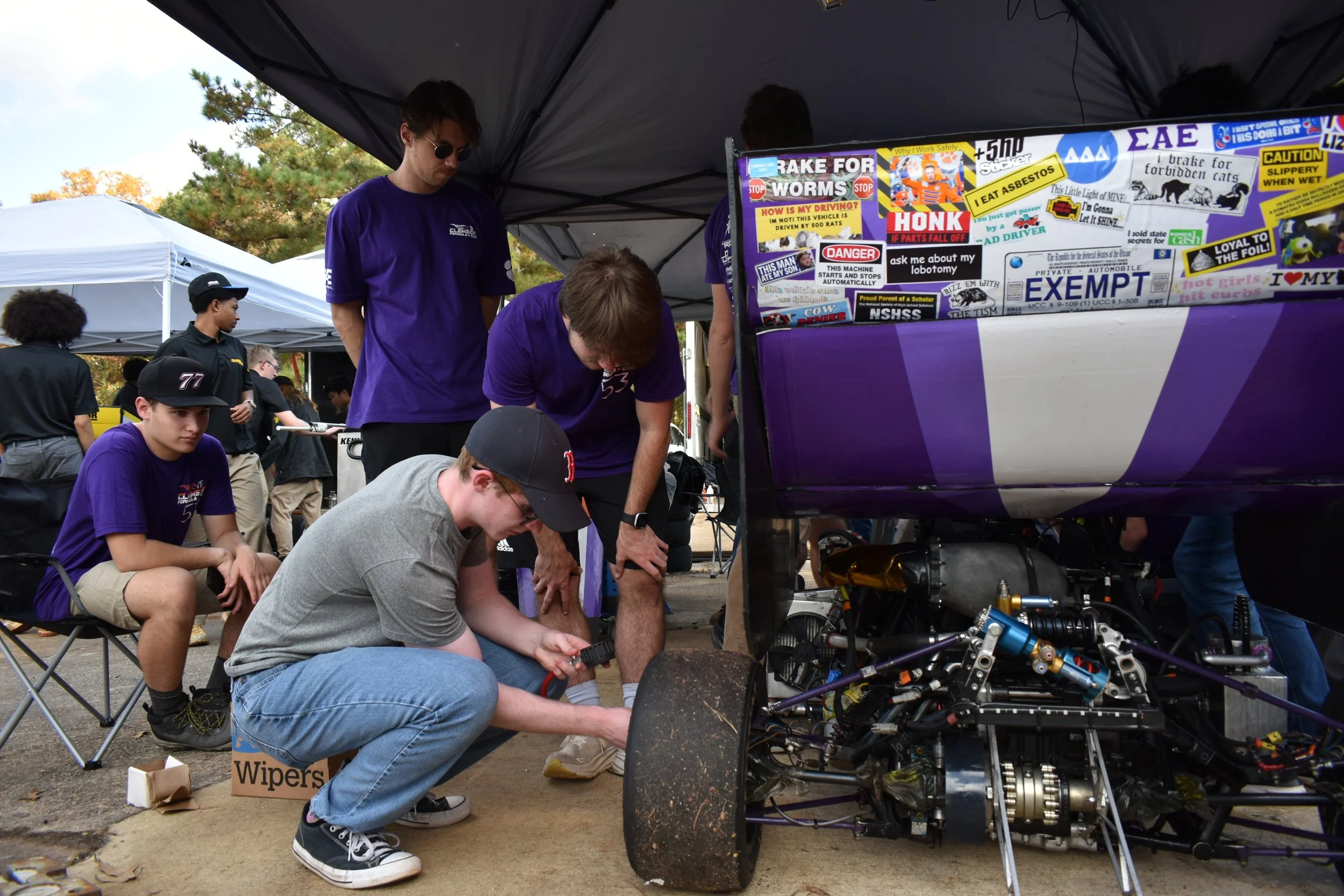
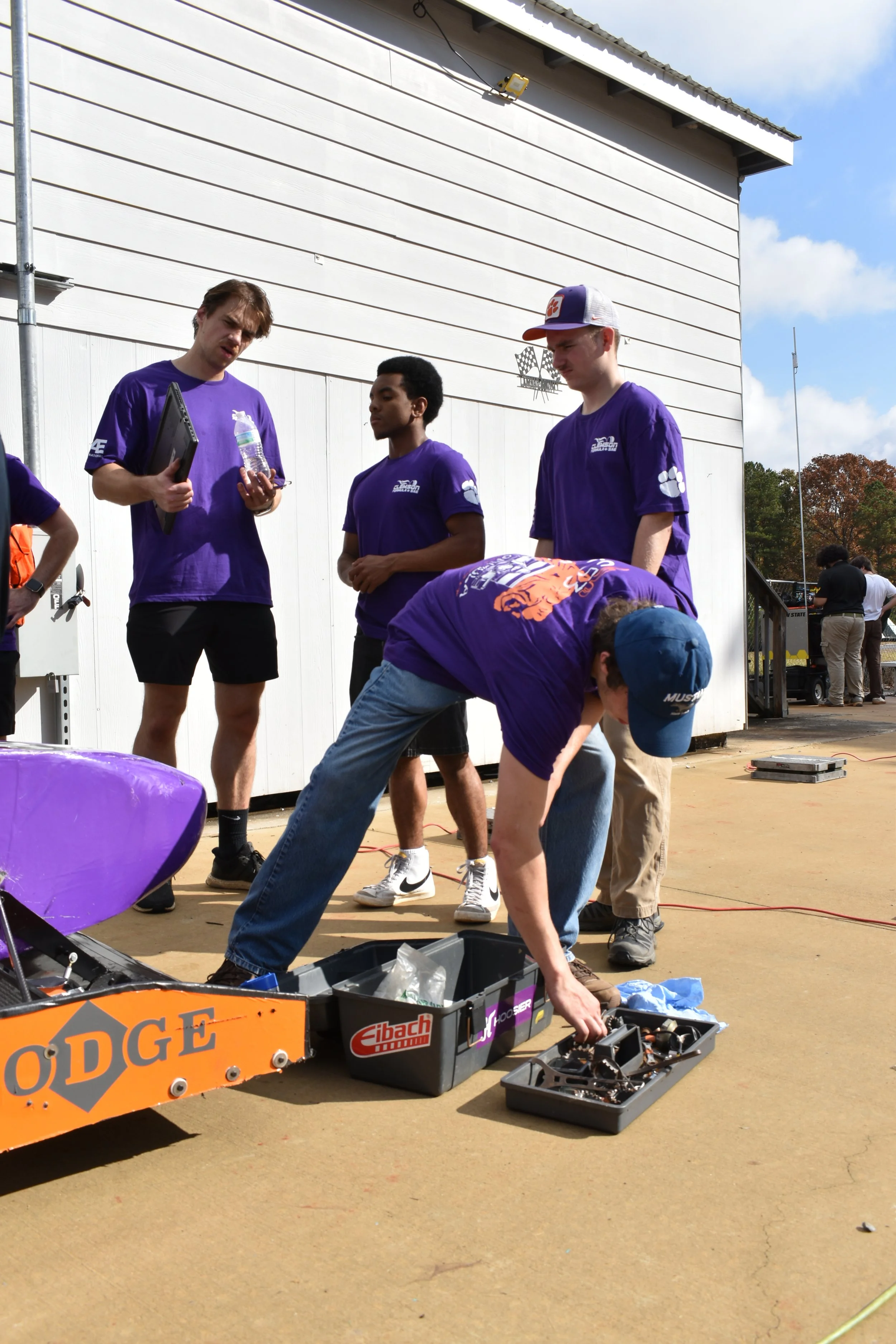
• Serve as a trusted set of hands for team leads to complete repairs, maintenance, and setup tasks across multiple subsystems.
• Support competition preparation by checking work completed by newer members, allowing subsystem leads to focus on higher-level priorities.
• Mentor younger members on shop workflow, order of operations, and best practices for preparing the car for dynamic events.
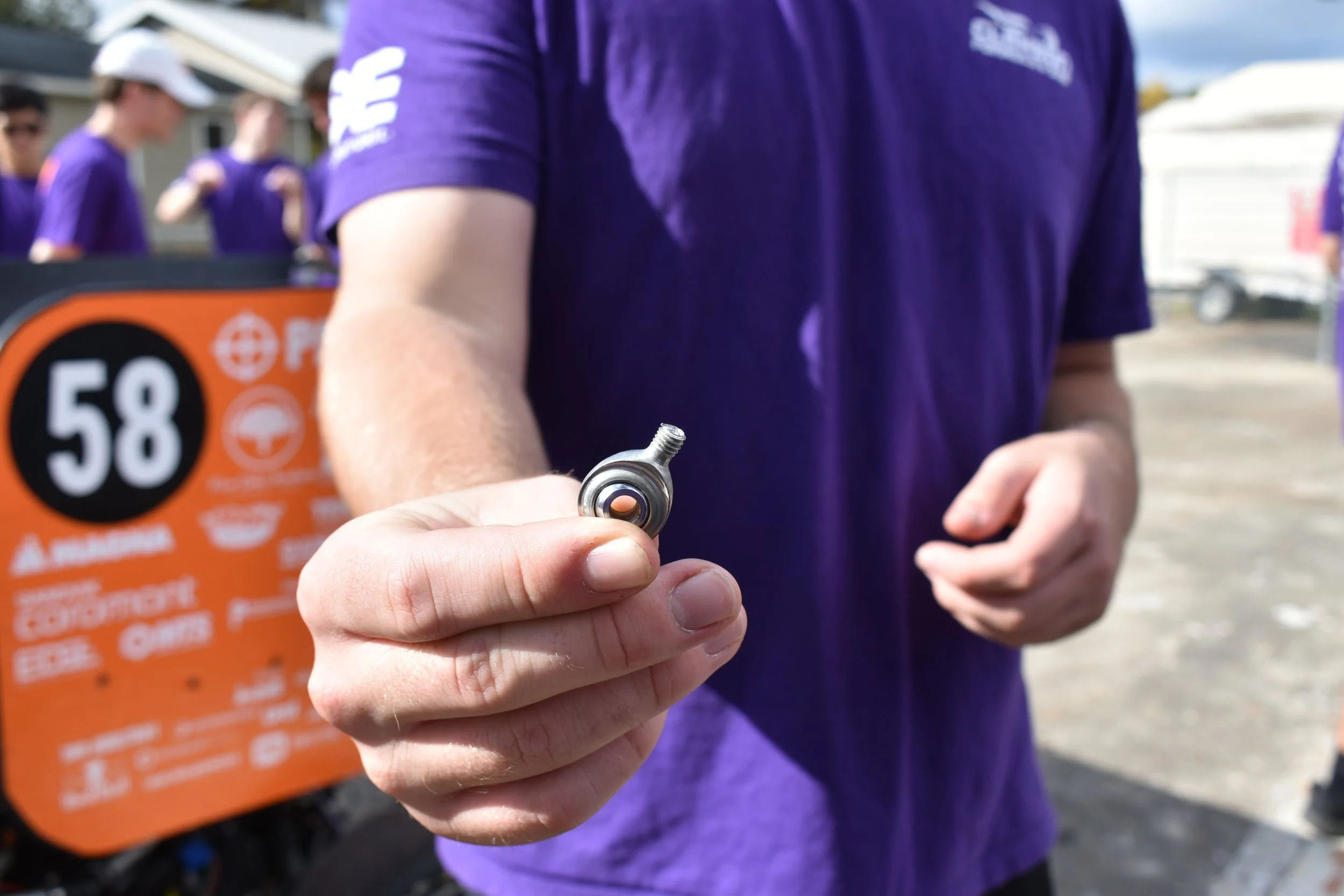
• Assist with troubleshooting and last-minute fixes during testing and competition, ensuring the car remains reliable and ready to run.
Engineering Takeaways
• Develop a strong system-level understanding of the vehicle by working across suspension, chassis, aerodynamics, and integration rather than owning a single component.
• Use MoTeC data alongside driver feedback to analyze vehicle behavior and guide setup changes.
• Gain insight into how setup changes and design choices influence the car’s operating window and overall performance.
• Analyze suspension kinematics to validate setup decisions and correlate on-track data with expected motion trends.
• Apply compliance analysis to understand why certain design decisions better achieve target kinematics and real-world behavior.
• Building intuition for how individual component behavior stacks up to affect suspension performance, vehicle balance, and on-track response.