
Predictive Active Roll Stabilization Using MPC and CarSim
Road curvature preview-based MPC control of independent electronic anti-roll bars using CarSim-Simulink co-simulation
Role
Controls Engineer

Team
3 Members

Duration
8 Weeks

Tools
MATLAB - Simulink - CarSim
Key Results
27%
LOWER PEAK ROLL
in ISO double lane change at 120 km/h
72%
LOWER FRONT ROLL IN SLALOM
at 70 km/h
CarSim Visualization of Slalom Test
MPC Controlled
Baseline
Reduced body roll with improved yaw and curvature tracking
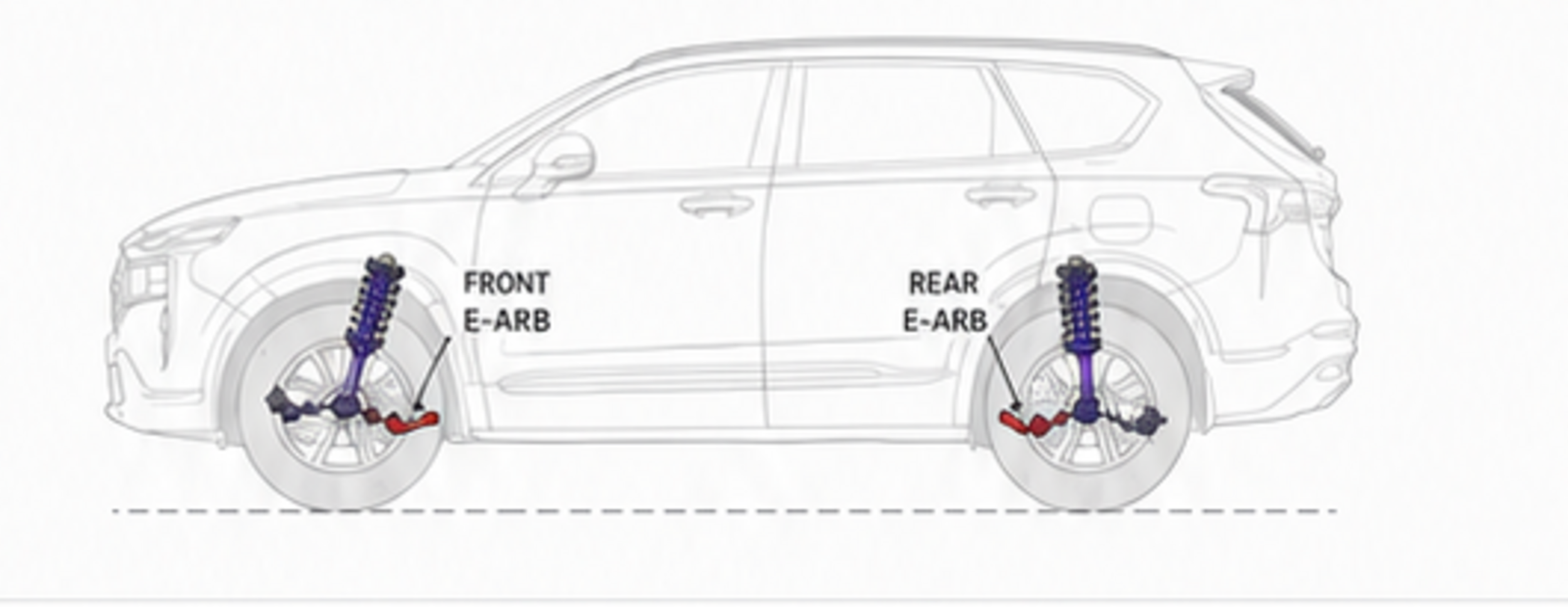
Passive anti-roll bars (ARBs) are a compromise between roll control and ride comfort. Our goal was to design a preview-based controller for independent electronic ARBs to actively counter act roll to improve stability in aggressive maneuvers without sacrificing ride comfort.
The system had to predict vehicle states and calculate the optimal response across the preview horizon and send commands in timely manner within real world response and power constraints
Engineering Challenge
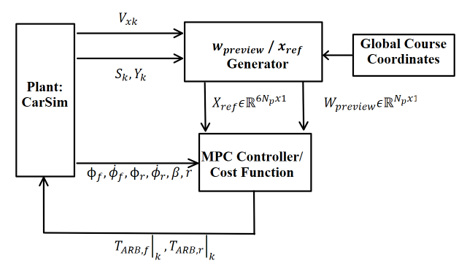
The controller uses upcoming road curvature and current vehicle states to predict the SUV’s roll response over a 0.5 s horizon. At each 50 ms step, MATLAB’s fmincon solver minimizes predicted deviance from the ideal vehicle state while penalizing excessive front and rear E-ARB torque. The resulting torque commands are applied to the high-fidelity CarSim vehicle model, whose updated states feed back into the next optimization cycle.
Predictive Control Architecture
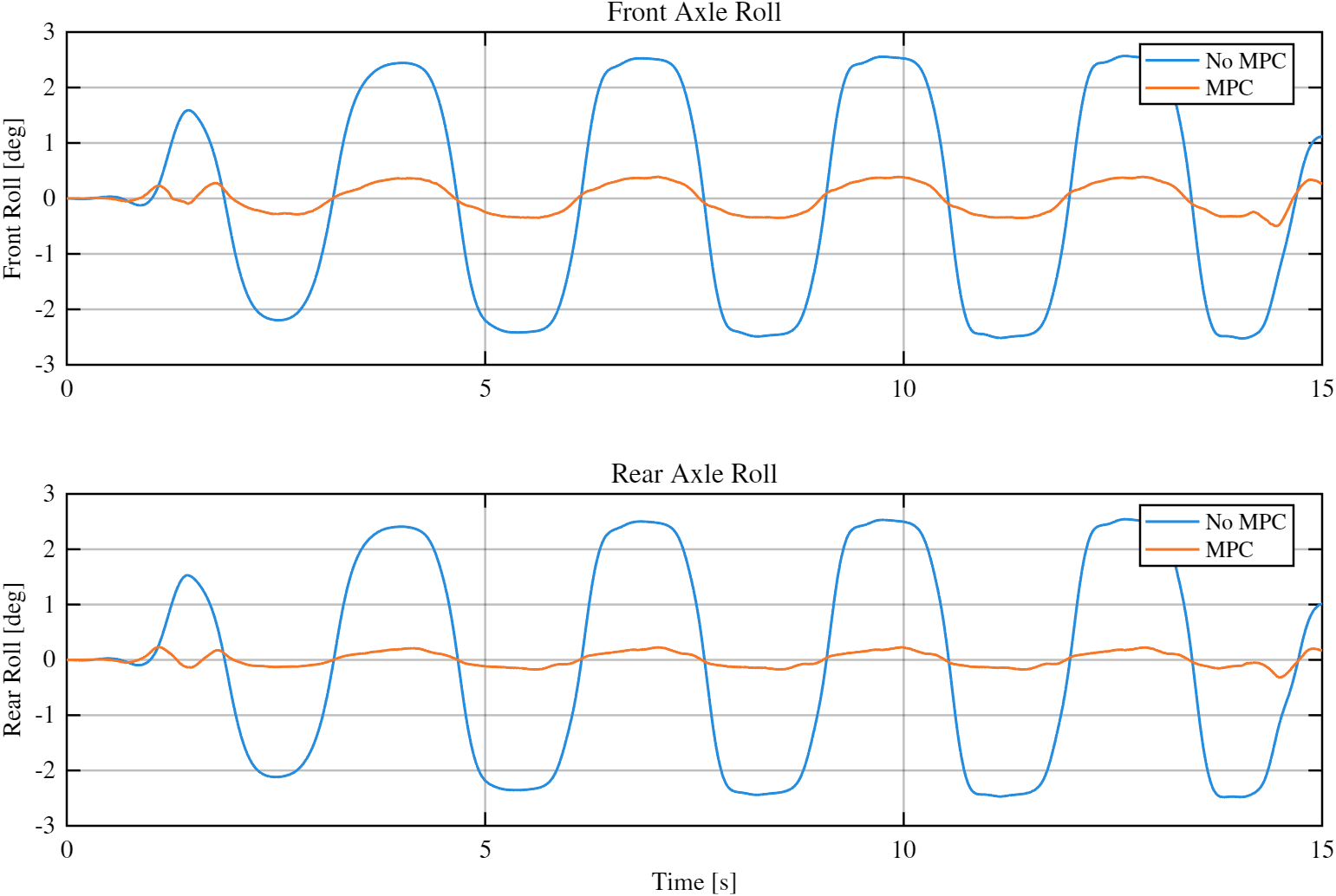
The slalom evaluated repeated transient roll control at lower speed. With sufficient actuator authority, MPC reduced peak body-roll magnitude by approximately 72% while maintaining the intended yaw-rate and sideslip response.
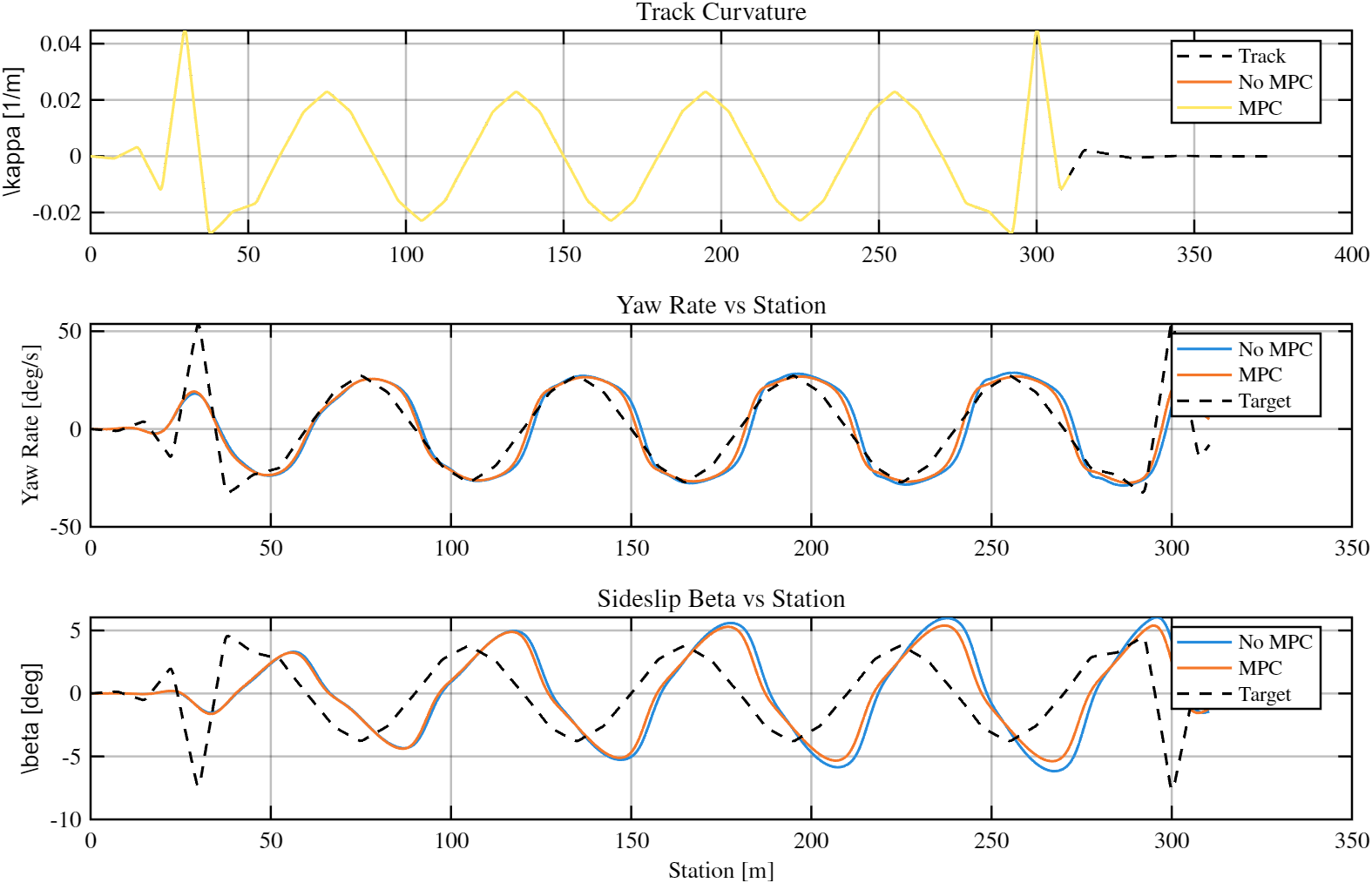
The slalom imposed repeated alternating curvature demands over the track distance. Despite continuous front and rear E-ARB intervention through each transition, yaw rate and sideslip remained comparable to the baseline vehicle, demonstrating roll control without a significant handling penalty.
From Model to Maneuver
ISO DOUBLE LANE CHANGE - 120 km/h
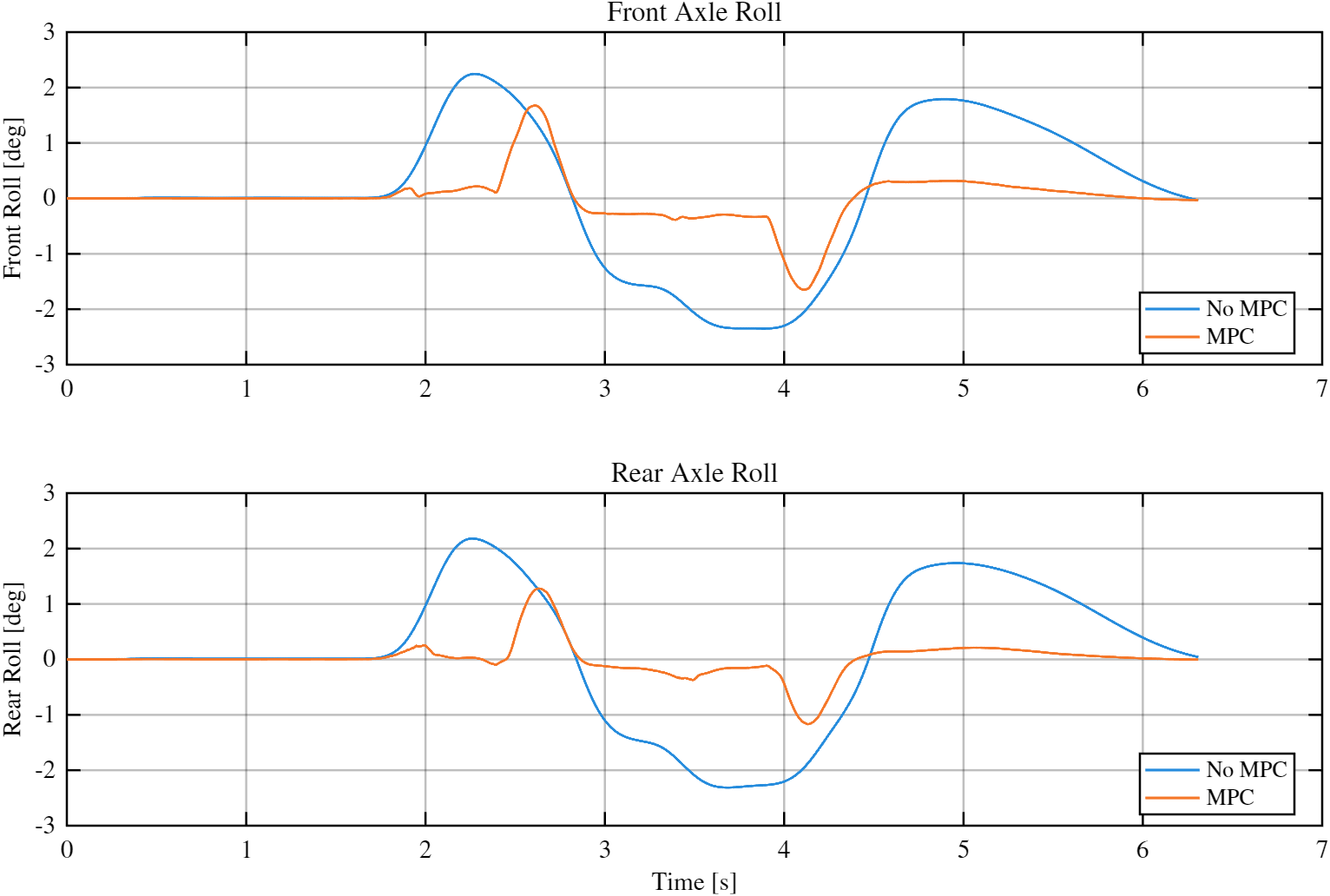
The double lane change tested the controller during a high-speed, rapidly reversing steering maneuver. Predictive E-ARB control reduced peak body roll by 27% versus the baseline vehicle, though front actuator torque approached the 4,000 N·m limit.
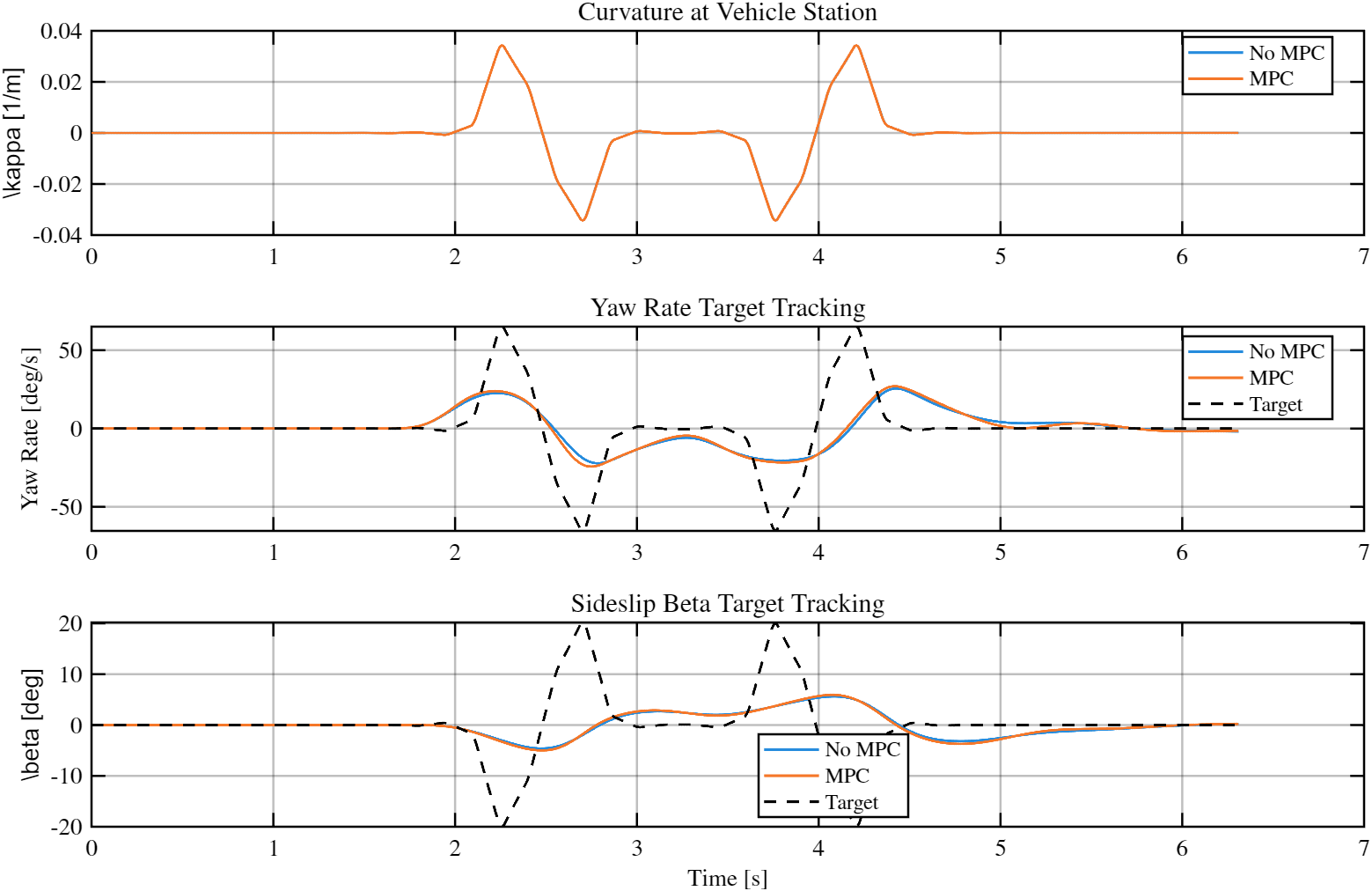
Road-curvature preview generated the upcoming yaw-rate and sideslip targets for the lane-change maneuver. MPC and baseline responses remained closely aligned, showing that the added roll-control torque preserved the vehicle’s directional response while reducing peak body roll.
SLALUM - 70 km/h
Engineering Tradeoffs

Actuator Authority
E-ARB torque was limited to approximately 4,000 N·m, which provided sufficient roll authority for most evaluated maneuvers but constrained performance during high-speed, high-lateral-acceleration events. Increasing available torque would improve roll suppression in those cases, but requires larger, heavier motors and higher electrical power capacity.

Preview Distance
Increasing the preview horizon gave the MPC more time to anticipate the maneuver, reducing body roll and improving yaw-rate tracking. However, each added prediction step increased the optimization problem size and solve time; the final horizon therefore had to balance control performance against the controller’s ability to run in real time.

Ride Quality
Aggressive roll control requires rapid changes in E-ARB torque, which can introduce abrupt load transfer and reduce ride comfort. Penalizing torque magnitude and torque rate produces smoother actuator commands, but reduces the controller’s ability to achieve maximum roll suppression
My Contributions

Developed the preview based MPC controller for independent front and rear E-ARB torque
Developed state equations relating curvature to desired vehicle states
Built CarSim-Simulink co-simulation framework and vehicle dynamics integration
Tuned controller weights, evaluated tradeoffs, and validated performance in high-speed maneuvers